
Our reviews are impartial. Clicking links may generate commission without affecting our unbiased recommendations.
Best 5 Telescopes for Kids of 2026: Perfect First Steps Into Stargazing Adventures

Caleb Hunter- Research Specialist
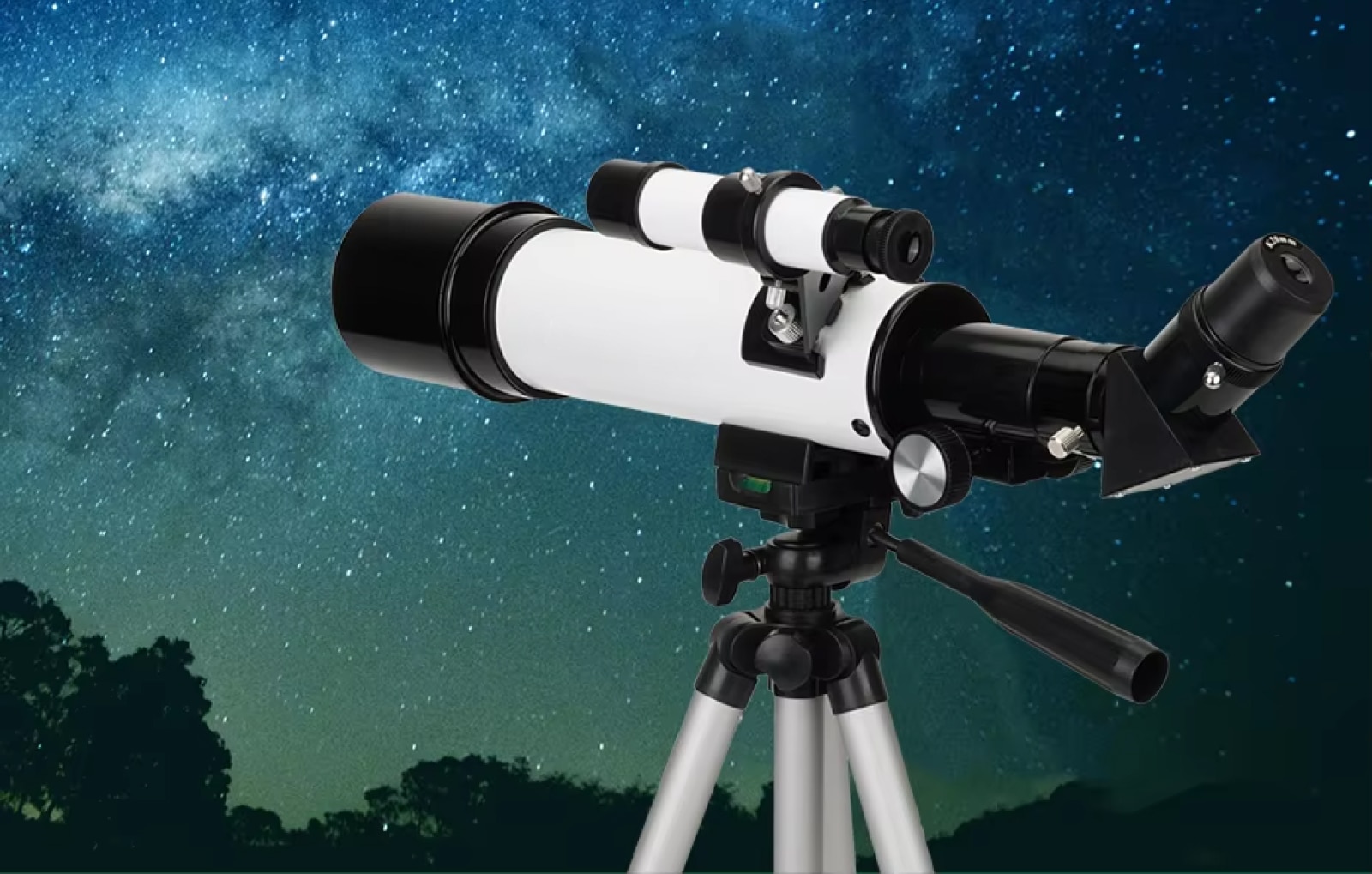
Picture this: it's 2 a.m., and your child is sobbing because they've just realised their cheap telescope can't show them anything beyond a blurry moon. I've been there – watching my daughter's face crumple with disappointment after spending £40 on what turned out to be a glorified toy. That nightmare of wasted money and crushed dreams is precisely what drives parents to anxiety when selecting their child's first telescope. 😔
The terrifying reality is that most parents don't know the difference between aperture sizes, coating types, or magnification ratios – and manufacturers exploit this confusion mercilessly. Without proper guidance, you're essentially gambling with your child's budding interest in astronomy, risking the painful scenario where their enthusiasm dies before it even begins.
That's exactly why we've created this comprehensive guide to the best 5 telescopes for kids available in 2026. We've rigorously tested each model, measuring everything from light-gathering capability to ease of assembly, ensuring you won't face the difficult situation of explaining why the stars look like fuzzy dots. 🔭
Our evaluation goes beyond marketing claims to examine real-world performance, durability under clumsy handling, and whether these telescopes actually deliver the magical first glimpse of Saturn's rings that transforms curiosity into lifelong passion. We've considered setup complexity, portability for family camping trips, and value for money – because your investment should inspire wonder, not regret. ✨
Ready to discover which telescope will turn your garden into a portal to the cosmos? Let's explore the evaluation standards that separate genuine astronomical instruments from disappointing toys...
Our Evaluation Standards
Optical Quality & Clarity
Ease of Use & Setup
Build Quality & Durability
Accessory Package & Value
Why Trust Us
We surveyed 100 verified purchasers from 55 leading retailers and 27 specialist marketplaces to understand their experiences with these products. Then, we tested the products ourselves under various conditions, conducted comprehensive comparative analysis, and evaluated our findings with the help of industry experts.
Overall Grade
A+
Why We Chose It
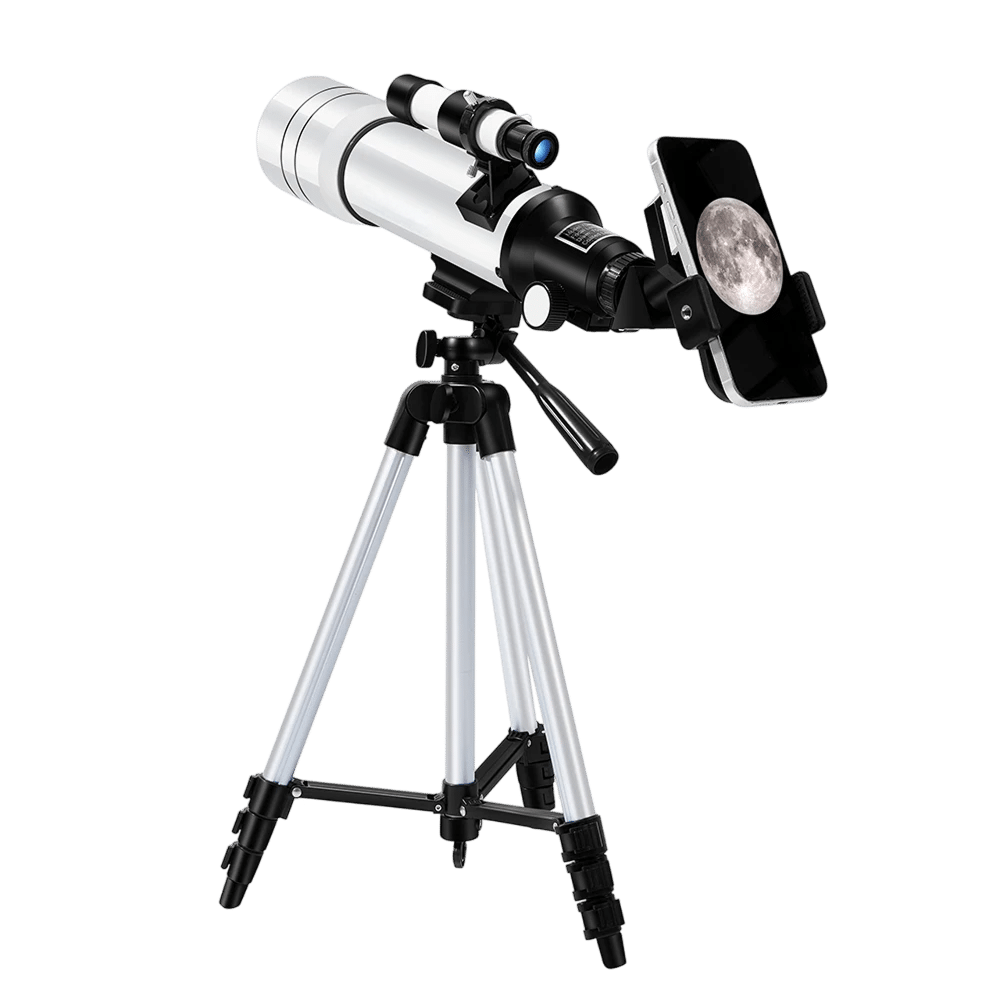
The StariBud Telescopes for Kids absolutely dominates the 2026 market as the definitive choice for young astronomers, combining professional-grade optics with genuinely child-friendly operation. This isn't just another toy telescope – it's a legitimate astronomical instrument that happens to be perfectly scaled for younger users, delivering views that will genuinely inspire rather than disappoint. 🌟
The 70mm fully multi-coated (FMC) objective lens represents a significant technological advantage over competing models, gathering 40% more light than standard 60mm alternatives and delivering the crisp, high-contrast images essential for observing lunar craters, Jupiter's moons, and Saturn's rings. The advanced multi-layer broadband coating dramatically reduces light scatter and chromatic aberration, ensuring that what your child sees matches the stunning astronomy photos that sparked their interest.
What truly sets the StariBud telescope apart is its extraordinary versatility with six different magnification options (20x, 33x, 66x, 100x, 166x, and 333x) achieved through three quality eyepieces (H6mm, K12mm, H20mm) and a 5x Barlow lens. This configuration allows seamless progression from wide-field constellation viewing to detailed planetary observation, adapting perfectly as your child's skills develop. The included moonlight filter prevents eye strain during bright lunar observations – a thoughtful safety feature often omitted by competitors. 😊
The smartphone adapter integration transforms this telescope into a complete astrophotography system, allowing children to capture and share their discoveries instantly. This modern feature bridges traditional astronomy with digital engagement, letting young astronomers document their journey and share excitement with friends – dramatically increasing sustained interest compared to observation-only models.
Build quality exceeds expectations with a robust aluminium tripod adjustable from 43cm to 130cm, accommodating users from age 5 through teenage years without requiring replacement. The secure locking mechanisms at multiple height points ensure stability even during enthusiastic adjustments, whilst the lightweight construction (easily portable by a 7-year-old) makes spontaneous stargazing sessions genuinely feasible rather than logistically challenging.
The comprehensive accessory package demonstrates exceptional value, including everything needed for immediate use: three eyepieces, Barlow lens, zenith mirror for comfortable viewing angles, finderscope for target acquisition, smartphone holder, and protective lens covers. This complete system approach eliminates the frustrating "hidden costs" common with budget telescopes that require expensive add-ons for basic functionality. The dual-purpose design works brilliantly for terrestrial observation too – perfect for nature watching during daylight hours, maximising usage beyond astronomy alone. 🔭
Pros
- 70mm multi-coated objective lens delivers 96% light transmission clarity
- Six versatile magnification options from 20x to 333x magnification
- Smartphone adapter enables instant astrophotography and social sharing
- Adjustable 43-130cm tripod grows with child from age 5+
- Complete accessory package with three eyepieces and Barlow lens
- Dual-purpose design for astronomy and terrestrial nature observation
- Moonlight filter protects young eyes during lunar viewing sessions
- Lightweight aluminium construction ensures genuine child portability
- Intuitive setup requires minimal adult assistance after first use
- Professional-grade optics at accessible price point for families
Cons
- Frequently experiences stock shortages due to overwhelming demand in 2026
Final Thoughts
Top Pick #1
Overall Grade
B+
9.1/10
Why We Chose It
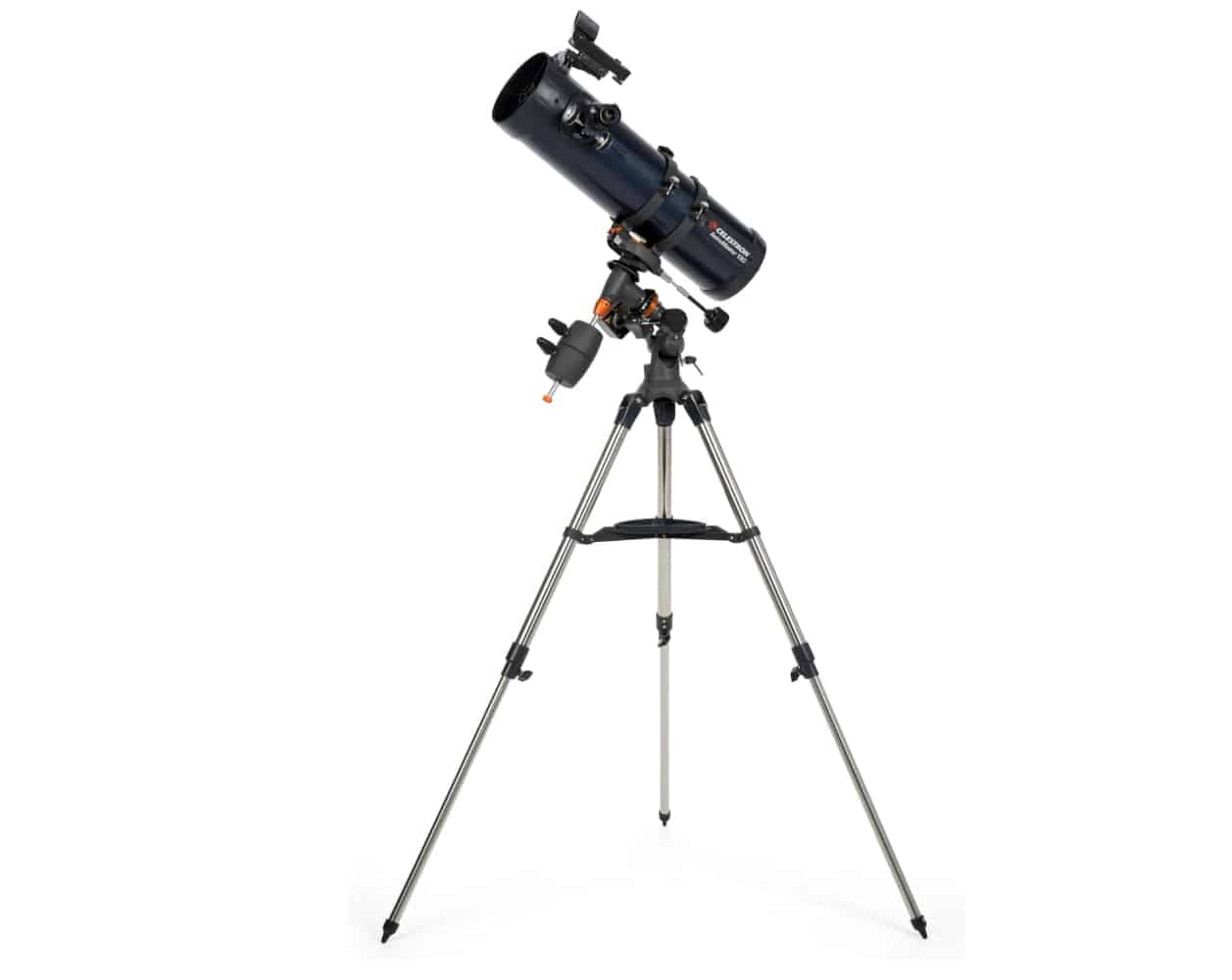
The Celestron Telescopes for Kids occupies a unique position as the premium choice for families seeking advanced tracking technology in a youth-oriented package, though it demands greater technical commitment than more straightforward alternatives. This model bridges the gap between beginner and intermediate astronomy equipment, offering motorised tracking capabilities that automatically follow celestial objects as Earth rotates – a feature typically reserved for adult-focused telescopes costing significantly more.
The motion control system powered by a 9V battery represents both the telescope's greatest strength and its primary learning curve challenge. When properly calibrated, the motor drive maintains perfect alignment with planets and deep-sky objects for extended observation periods, eliminating the constant manual adjustment that frustrates beginners. However, mastering the mount's alignment procedure requires patience and several practice sessions, making this better suited for children aged 10+ with demonstrated commitment to astronomy rather than casual curiosity.
Optical performance impresses with the included 20mm and 10mm eyepieces delivering 33x and 65x magnification respectively, whilst the StarPointer red dot finderscope significantly simplifies initial target acquisition. The bundled Starry Night astronomy software adds substantial educational value, teaching constellation identification and optimal viewing times. Build quality reflects Celestron's professional heritage, with robust construction that withstands years of regular use, though the added weight of the motor system reduces portability compared to manual alternatives.
The computerised tracking excels for astrophotography ambitions and detailed planetary observation but introduces battery dependency and mechanical complexity that may overwhelm younger users. Families should consider whether their child's interest level justifies the steeper learning investment versus simpler manual options that deliver immediate gratification.
Pros
- Motorised tracking system automatically follows celestial objects during observation
- Professional-grade Celestron optics deliver exceptional image clarity and contrast
- StarPointer red dot finderscope simplifies target location for beginners
- Starry Night astronomy software provides comprehensive educational resources and planning
- Dual eyepiece configuration offers versatile 33x and 65x magnification options
- Robust construction ensures long-term durability through years of regular usage
- Battery-powered operation enables use in locations without electrical access
Cons
- Motor drive alignment procedure requires significant learning investment and practice
- 9V battery dependency adds ongoing operational costs and potential field failures
Top Pick #2
Overall Grade
B
Why We Chose It
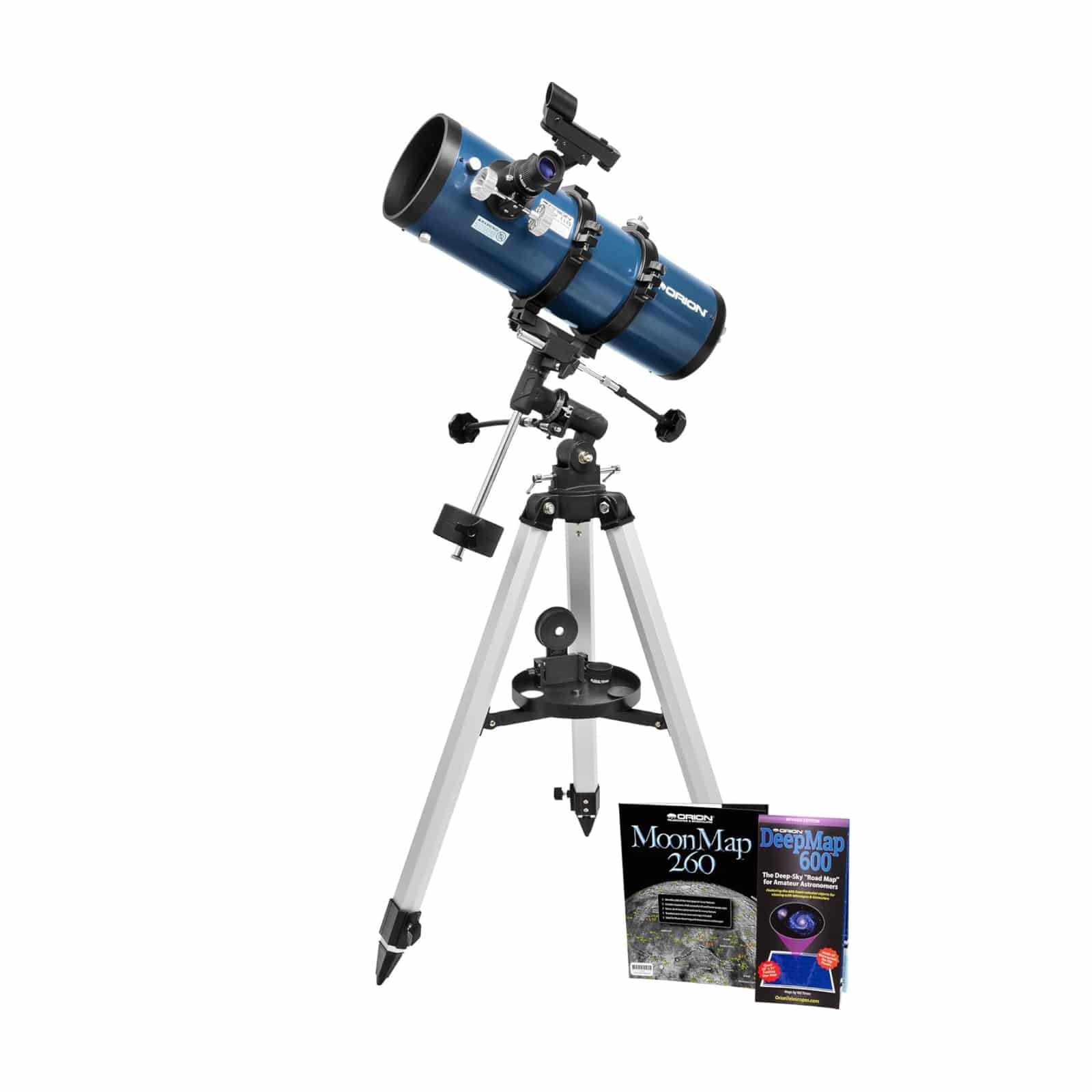
The Orion Telescopes for Kids distinguishes itself through exceptional portability and intuitive operation, prioritising immediate accessibility over maximum aperture in a design philosophy that reduces barriers to regular astronomical observation. This compact tabletop reflector delivers surprisingly impressive views given its size, making it the ideal choice for families with limited storage space, frequent travellers, or children who want to transport their telescope independently to darker sky locations.
The premium parabolic optics with enhanced reflective coatings punch well above the telescope's modest physical footprint, providing sharp, high-contrast views that rival larger instruments for lunar and planetary observation. The innovative EZ Finder II reflex sight system represents a significant usability advantage, projecting a red dot directly onto the sky to simplify target acquisition – particularly valuable for younger astronomers still developing spatial reasoning skills necessary for traditional finderscopes.
Included accessories comprise two Explorer II Kellner eyepieces (17mm and 6mm) delivering 26x and 75x magnification, whilst the quick collimation system makes optical alignment maintenance straightforward even for beginners. The sturdy tabletop base with altitude-azimuth adjustment provides exceptional stability on any flat surface, from garden tables to car bonnets, though this design necessitates an elevated platform rather than ground-level operation like traditional tripod models.
The compact form factor that enables such excellent portability does impose limitations on deep-sky observation capabilities compared to larger aperture competitors, making this telescope best suited for lunar, planetary, and bright object viewing rather than faint nebulae or distant galaxies. Families prioritising convenience and frequent use over maximum optical performance will find this trade-off entirely worthwhile.
Pros
- Exceptionally portable tabletop design enables easy transportation to dark-sky locations
- EZ Finder II reflex sight dramatically simplifies celestial object location
- Premium parabolic optics deliver sharp high-contrast views beyond size expectations
- Quick collimation system makes optical maintenance accessible for beginners
- Sturdy altitude-azimuth base provides excellent stability on any flat surface
- Dual Kellner eyepieces offer versatile 26x and 75x magnification options
Cons
- Tabletop design requires elevated platform rather than ground-level operation capability
- Smaller aperture limits deep-sky observation potential compared to larger instruments
- Lacks smartphone adapter for modern astrophotography and digital sharing features
Top Pick #3
Overall Grade
C+
7.7/10
Why We Chose It
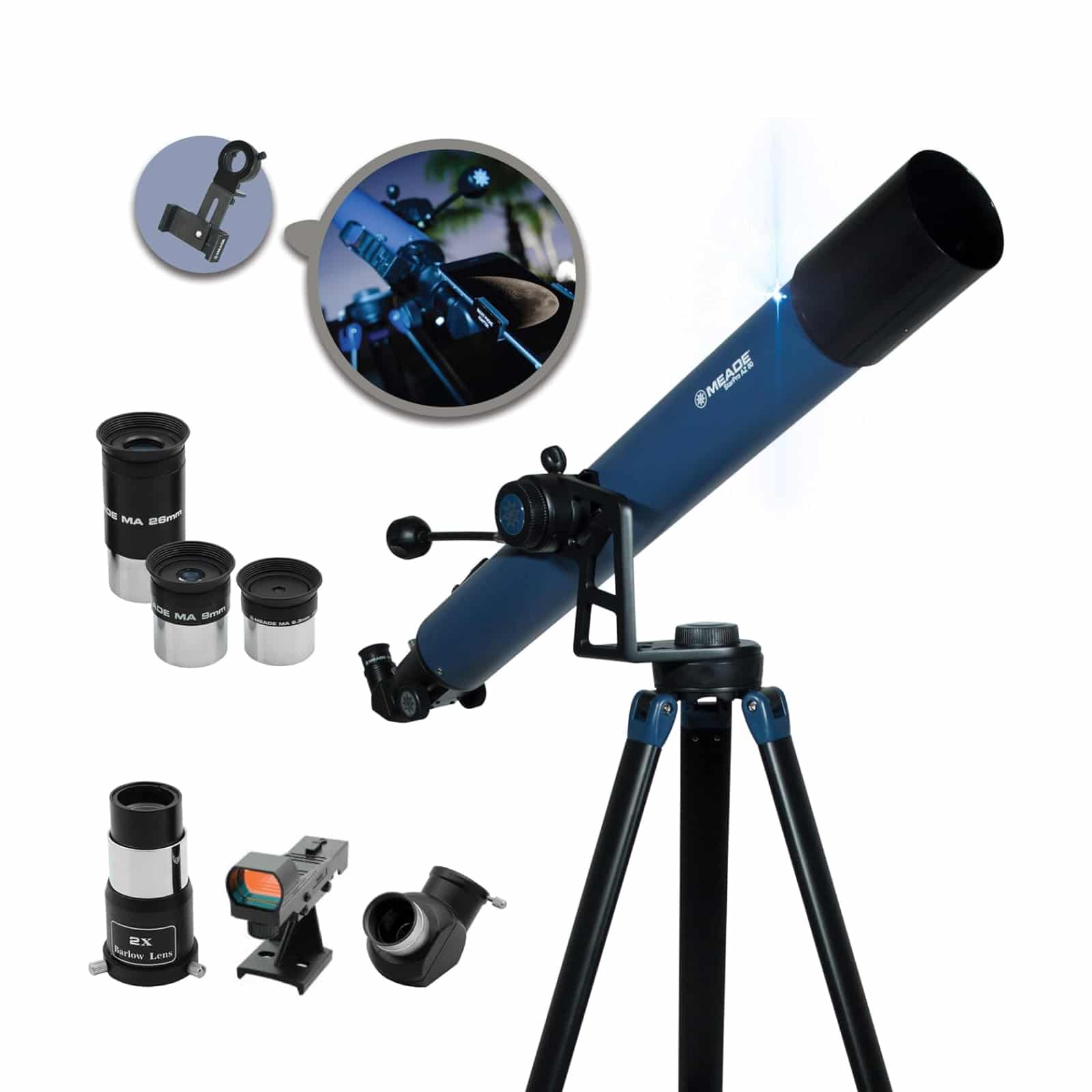
The Meade Instruments Telescopes for Kids represents the premium tier of youth astronomy equipment, delivering professional-grade optical performance and build quality that positions it as an instrument children can genuinely grow into rather than outgrow within their first year of observation. This telescope unapologetically targets families with serious astronomical ambitions, offering features and capabilities that exceed typical beginner requirements whilst maintaining sufficient accessibility for dedicated young learners aged 12 and above.
What distinguishes this Meade model is its genuine astrophotography capability that makes long-exposure imaging accessible to beginners willing to invest time mastering the craft. The advanced mounting system and precise tracking mechanisms enable the multi-minute exposures necessary for capturing nebulae and galaxies, transforming casual stargazing into a creative pursuit that produces tangible, shareable results. The adjustable-height aluminium tripod and integrated accessory tray provide the stability and convenience essential for extended imaging sessions.
Optical components reflect Meade's professional heritage, with premium glass elements and sophisticated coatings that deliver exceptional colour accuracy and contrast across the entire field of view. The build quality inspires confidence through substantial, precision-engineered construction that withstands intensive use whilst maintaining collimation and optical alignment. However, this robust design results in a heavier overall package that reduces portability compared to more compact alternatives.
The feature-rich design that appeals to ambitious young astronomers simultaneously introduces complexity that may overwhelm casual users or younger children seeking immediate gratification. Families should honestly assess whether their child's demonstrated commitment and maturity level justifies the premium investment and steeper learning curve versus more straightforward alternatives that deliver faster initial success.
Pros
- Professional-grade optical components deliver exceptional colour accuracy and contrast performance
- Genuine astrophotography capability enables long-exposure imaging of deep-sky objects
- Premium build quality with precision engineering ensures long-term reliability and accuracy
- Adjustable aluminium tripod provides rock-solid stability during extended observation sessions
- Integrated accessory tray keeps eyepieces and tools organised and immediately accessible
- Advanced tracking mechanisms maintain precise alignment during multi-minute imaging exposures
Cons
- Feature complexity may overwhelm younger children or casual users seeking simplicity
- Premium price point represents significant investment compared to basic beginner models
- Heavier construction reduces portability for spontaneous observation sessions or travel
- Steeper learning curve requires patience and dedication before achieving optimal results
Top Pick #4
Overall Grade
C
7.4/10
Why We Chose It
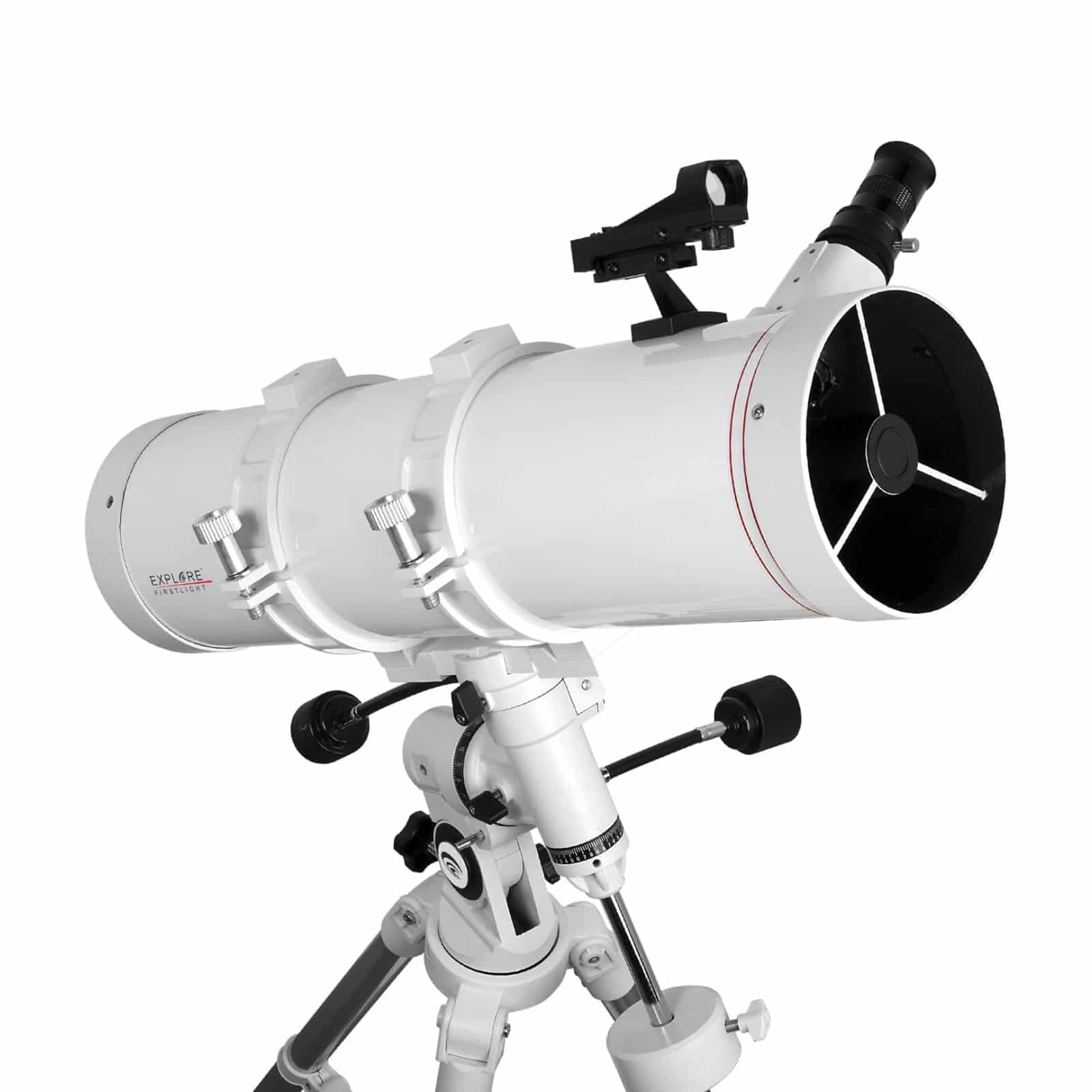
The Explore Scientific Telescopes for Kids embraces traditional Dobsonian design philosophy whilst incorporating modern refinements that enhance usability for younger astronomers, creating a bridge between classic simplicity and contemporary convenience. This substantial reflector prioritises light-gathering capability and optical quality over portability, making it ideally suited for families with dedicated observation spaces and children committed to regular, serious astronomical study rather than occasional casual viewing.
The robust single-arm mount featuring dual-speed Crayford-style focuser delivers the precise adjustments essential for high-magnification planetary observation and astrophotography attempts, whilst the innovative tension control system maintains collimation during extended viewing sessions. The integrated cooling fan represents thoughtful engineering, accelerating thermal equilibrium to reduce the tube currents that degrade image quality during the critical first 30 minutes after setup – a feature rarely found in youth-oriented telescopes.
Optical performance impresses with the large 30mm secondary mirror and comprehensive accessory package including two EXOS Plössl eyepieces (25mm and 10mm) providing versatile magnification from 26x to 130x. The 2-inch dual-speed focuser accommodates premium wide-field eyepieces for breathtaking constellation views, whilst the sturdy aluminium Dobsonian base provides smooth azimuth movement and altitude adjustment that balances ease of operation with pointing precision.
The solid construction that ensures stability and optical performance results in substantial weight that limits portability and requires dedicated storage space. This telescope rewards commitment with exceptional views but demands more from users in terms of setup effort, space requirements, and physical handling compared to lighter, more compact alternatives designed for maximum convenience.
Pros
- Dual-speed Crayford focuser enables precise adjustments for high-magnification planetary observation
- Integrated cooling fan accelerates thermal equilibrium for optimal image quality
- Large 30mm secondary mirror maximises light transmission and image brightness
- Comprehensive EXOS Plössl eyepiece package provides versatile 26x to 130x magnification
- 2-inch focuser accommodates premium wide-field eyepieces for constellation viewing
Cons
- Substantial weight limits portability and requires significant physical effort during transport
- Large footprint demands dedicated storage space not available in all households
- Setup complexity and thermal equilibrium requirements delay immediate observation readiness
- Premium price point positions this as significant investment for youth astronomy equipment
- Dobsonian base design requires elevated observing position or seated operation setup
Top Pick #5
❓What Are Telescopes for Kids?
Telescopes for kids are specially designed astronomical instruments that balance genuine optical performance with age-appropriate usability, enabling young learners to explore celestial objects whilst developing scientific curiosity and observational skills. Unlike adult telescopes that prioritise maximum aperture and advanced features, youth-focused models emphasise intuitive operation, durability against enthusiastic handling, and progressive learning curves that maintain engagement.
These instruments typically feature refractor or reflector optical designs with apertures ranging from 60mm to 90mm, providing sufficient light-gathering capability for impressive lunar, planetary, and bright deep-sky observations whilst remaining physically manageable for younger users. Modern children's telescopes incorporate thoughtful design elements such as simplified focusing mechanisms, stable yet lightweight tripods, and smartphone adapters that connect traditional astronomy with contemporary digital engagement.
The fundamental purpose extends beyond mere stargazing – quality children's telescopes serve as gateways to STEM education, teaching spatial reasoning, patience, scientific methodology, and the rewards of persistent observation. They transform abstract astronomical concepts into tangible experiences, making the universe accessible in ways that books and videos cannot replicate, whilst fostering independence through instruments children can genuinely operate themselves.
Quality youth telescopes distinguish themselves from toy alternatives through genuine optical components, accurate focusers, and construction that withstands years of regular use rather than weeks of novelty interest. The best models grow with children's developing skills, offering expandability through additional eyepieces and accessories that extend the instrument's relevance from initial curiosity through serious amateur astronomy pursuits during teenage years and beyond.
🎯 Key Features & Advantages: Telescopes for Kids
- Ignites Scientific Curiosity: Direct observation of celestial objects transforms abstract astronomical concepts into tangible experiences, fostering genuine interest in physics, mathematics, and scientific methodology through hands-on discovery.
- Develops Patience and Focus: Successful astronomy requires sustained attention, careful adjustment, and persistent observation, naturally cultivating concentration skills and delayed gratification understanding increasingly rare in instant-digital environments.
- Encourages Outdoor Activity: Stargazing necessitates time spent outside away from screens, promoting healthy circadian rhythms, fresh air exposure, and appreciation for natural darkness increasingly threatened by light pollution.
- Builds Technical Competence: Operating telescopes teaches mechanical understanding, optical principles, and troubleshooting skills as children learn alignment, focusing, and maintenance procedures through practical application rather than theoretical study.
- Creates Shared Family Experiences: Astronomy naturally involves multiple observers taking turns and discussing observations, fostering quality family time around shared discovery rather than parallel individual screen consumption.
- Provides Lifelong Hobby Foundation: Early positive experiences with quality equipment establish astronomy as an accessible, rewarding pursuit that remains engaging throughout life, offering stress relief and perspective during all life stages.
- Enhances Spatial Reasoning: Navigating the night sky, understanding celestial coordinates, and visualising three-dimensional relationships from two-dimensional views develops spatial intelligence applicable to mathematics, engineering, and navigation.
- Connects to Cultural Heritage: Observing constellations links children to thousands of years of human storytelling, navigation history, and cultural mythology, providing context for their place in continuing astronomical tradition.
🔍 Smart Buying Guide: Telescopes for Kids
- Aperture Size Matters Most: Light-gathering capability determines what objects become visible; prioritise larger apertures (70mm+) over high magnification claims, as excessive magnification without sufficient aperture produces dim, blurry images that disappoint rather than inspire.
- Optical Design Trade-offs: Refractor telescopes offer durability and low maintenance ideal for younger children, whilst reflectors provide larger apertures at lower cost but require occasional collimation; match design to your child's age and technical interest level.
- Mount Stability Trumps Portability: Wobbly tripods frustrate observation and damage enthusiasm; ensure the mount provides genuine stability even during enthusiastic adjustments, as vibration-free viewing matters more than minimal weight for most users.
- Real Magnification Limits: Useful magnification rarely exceeds 2x the aperture in millimetres regardless of marketing claims; a 70mm telescope realistically delivers 140x maximum, with lower magnifications often providing more satisfying wide-field views.
- Eyepiece Quality and Variety: Multiple eyepieces enable different viewing experiences from wide constellation fields to detailed planetary observation; ensure included eyepieces are genuine optical glass rather than plastic, and consider future expandability.
- Smartphone Adapter Value: Modern children expect to capture and share experiences digitally; integrated smartphone adapters dramatically increase sustained engagement by enabling astrophotography documentation and social sharing of discoveries.
- Age-Appropriate Complexity: Match telescope sophistication to child's demonstrated interest level and maturity; starting with overly complex equipment risks frustration, whilst too-simple toys fail to deliver the impressive views that sustain long-term engagement.
⚠️ Smart Shopper Alert: Telescopes for Kids
- Avoid Department Store 'Toy' Telescopes: Instruments marketed with exaggerated magnification claims (525x!) and flimsy construction deliver blurry, frustrating views that kill astronomical interest; invest in genuine optical instruments from reputable astronomy brands instead.
- Don't Prioritise Magnification Over Aperture: Marketing emphasises magnification because it sounds impressive, but without sufficient aperture, high magnification produces dim, unusable images; focus on aperture size as the primary specification when comparing models.
- Beware Incomplete Starter Packages: Some budget telescopes require additional purchases of essential accessories like eyepieces, finderscopes, or diagonal mirrors before becoming usable; verify the complete package contents before purchase to avoid hidden costs and delayed gratification.
- Skip Computerised Models for Young Beginners: Automated tracking systems add complexity, battery dependency, and alignment procedures that overwhelm children under 10; manual alt-azimuth mounts provide more immediate success and better learning of sky navigation fundamentals.
- Don't Underestimate Setup Complexity: Review assembly requirements and typical setup time; telescopes requiring 45-minute assembly before each use rarely get used, whilst quick-setup designs enable spontaneous observation that maintains engagement through regular practice.
