
Our reviews are impartial. Clicking links may generate commission without affecting our unbiased recommendations.
Best 5 3d Printers of 2026: Reliable Desktop Fabrication Solutions

Thomas Hunter- Research Specialist
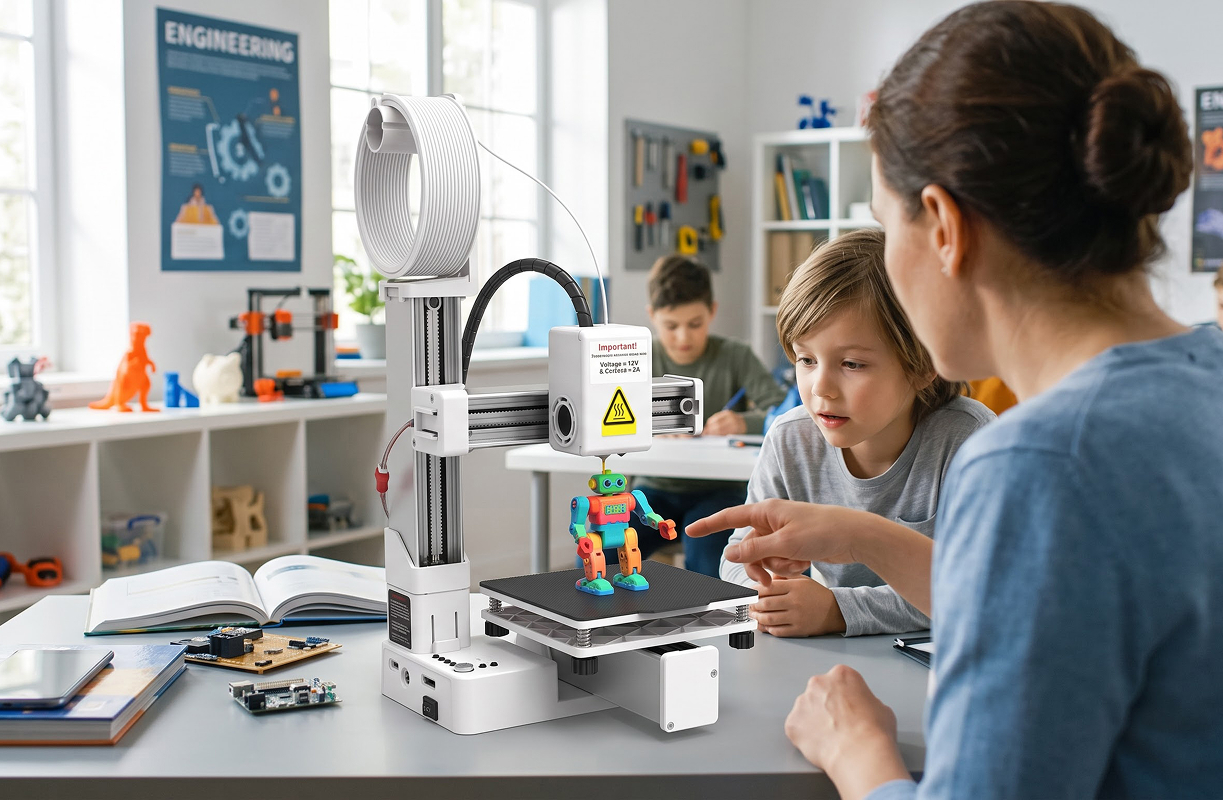
Struggling through endless failed prints, warped corners, and clogged nozzles is an exhausting nightmare that turns a fun creative hobby into pure mechanical rage. 😡 Trying to calibrate bed level screws in the middle of the night while anxious about a critical deadline leaves creators completely drained and resentful. I spent hours wrestling with cheap frames that violently shook themselves out of alignment, ruining half-finished prototypes and wasting expensive spools of filament without mercy.
The marketplace makes finding the best 5 3d printers extraordinarily complicated due to confusing technical jargon, exaggerated speed claims, and deceptive software locks that trap beginners. Navigating this endless labyrinth of conflicting specifications often leads enthusiastic tinkerers straight into buying finicky, unreliable platforms. Choosing poorly results in terrifying thermal errors, persistent adhesion failures, and hours of wasted time spent troubleshooting obscure firmware bugs instead of bringing imaginative designs into physical reality.
Fortunately, modern fabrication devices have evolved to eliminate these annoying roadblocks through intelligent leveling sensors, integrated slicing algorithms, and vibration-dampened motion chassis. Our comprehensive evaluation cuts through promotional noise to highlight reliable machines that guarantee a seamless transition from digital files to solid parts. Explore our rigorously tested selections below to discover which hardware provides effortless, high-precision results for your creative workstation! ✨
Our Evaluation Standards
Dimensional Precision and Resolution
Setup Simplicity and Automation
Thermal Reliability and Extrusion
Software Workflow and Connectivity
Why Trust Us
We surveyed 100 verified purchasers from 55 leading retailers and 27 specialist marketplaces to understand their experiences with these products. Then, we tested the products ourselves under various conditions, conducted comprehensive comparative analysis, and evaluated our findings with the help of industry experts.
Overall Grade
A+
Why We Chose It
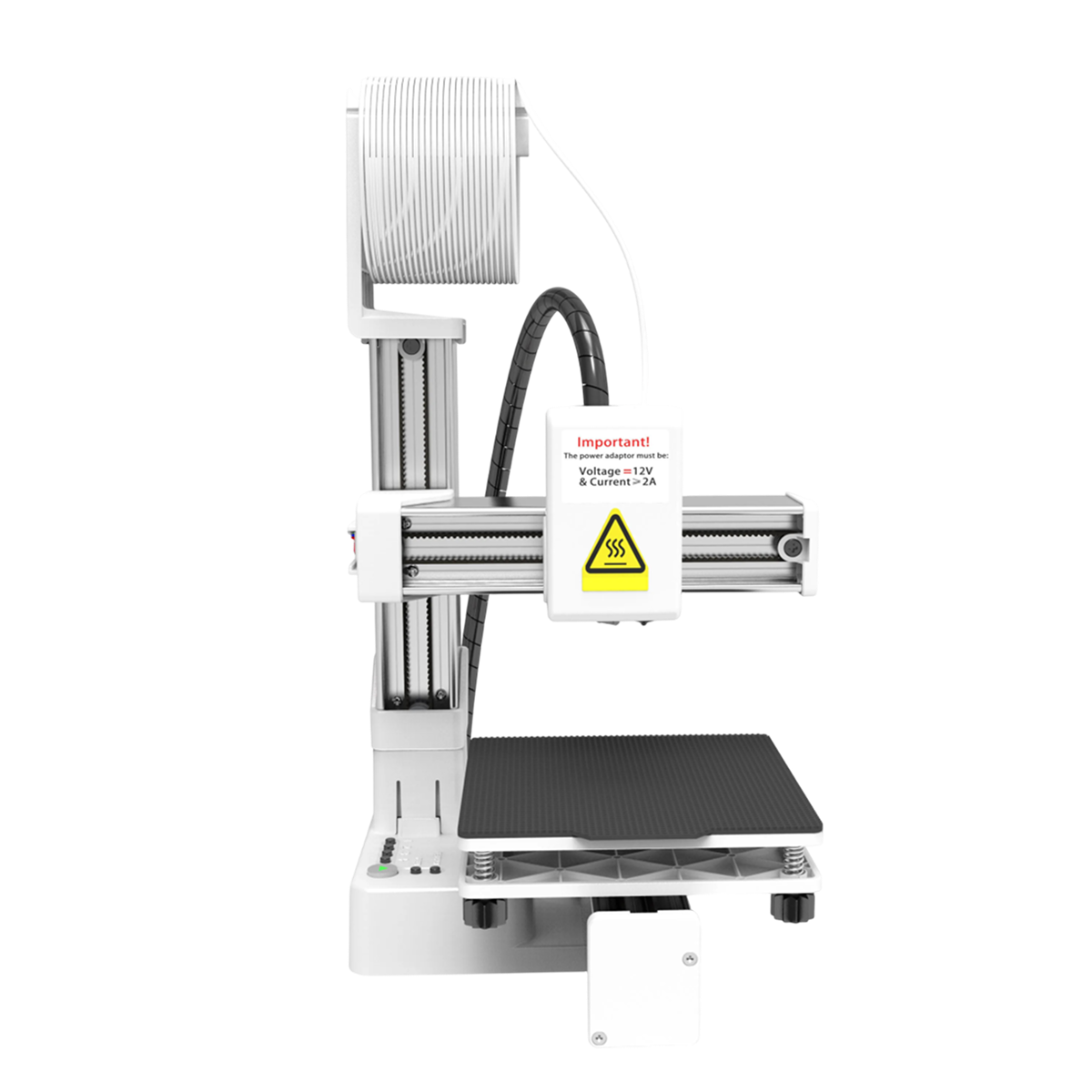
Setting up your desktop workshop should never feel like assembling an industrial power plant from scratch. The LayerPryn 3d Printer establishes a commanding presence in entry-level digital fabrication by discarding convoluted setup processes entirely. Engineered specifically for hobbyists, STEM students, and novice makers, this dynamic machine provides an accessible bridge into modern rapid prototyping. It arrives ready to produce pristine plastic artifacts right out of the packaging, removing the intimidating technical hurdles that commonly deter aspiring engineers and weekend creators. 🚀
Equipped with an optimized single-nozzle hotend system, the unit exhibits exceptional thermal stability when melting 1.75mm PLA and TPU filaments. Achieving a steady movement pace of 30mm/s print velocity alongside an accelerated peak rate of 40mm/s, the hardware guarantees consistent layer stacking without the messy stringing common in uncalibrated machines. The compact build volume of 100 x 100 x 100mm delivers tight mechanical tolerances down to an impressive 0.1mm accuracy, making it ideal for miniatures, educational models, and bespoke household accessories. ✨
Operational convenience remains at the heart of this machine's thoughtful mechanical engineering. The whisper-quiet motion axes ensure that running extensive fabrication jobs in bedrooms, quiet home offices, or shared classrooms will never disrupt domestic peace or ongoing study sessions. The proprietary single-button tactile interface strips away overwhelming sub-menus, allowing users of any technical skill level to initiate, pause, and inspect ongoing tasks effortlessly without touching a connected workstation or dealing with driver crashes.
Software integration is remarkably smooth, welcoming both standard open formats and beginner-oriented processing tools. Users can seamlessly prepare their slicing profiles through the dedicated Easyware package featuring auto-slicing functions, or slice advanced geometries using industry-standard CURA. The generated G-code files load instantly into the system via direct offline TF card storage, isolating the machine from annoying operating system updates or accidental USB cable disconnections mid-print. 💡
The physical footprint of the unit remains exceptionally lightweight and portable, permitting users to reposition the printer across dynamic workspaces with total ease. Built-in stepper dampening ensures that mechanical vibrations are kept to an absolute minimum, safeguarding delicate features as the toolhead glides across the unheated print surface. Every component feels purposeful, ensuring students and DIY hobbyists achieve immediate satisfaction on their initial fabrication attempts without wrestling with loose structural bolts or unaligned pulleys.
For anyone wanting to eliminate complex calibration rituals, investing in the LayerPryn 3d Printer guarantees an enjoyable, reliable creative journey. Backed by extensive tutorial files, pre-loaded sample objects, and instructional documentation directly stored on the included memory media, the learning curve transforms from an agonizing struggle into pure imaginative discovery. It delivers incredible educational utility and robust reliability, earning its well-deserved title as the undisputed champion of accessible desktop fabrication. ⭐
Pros
- Remarkably quiet stepper motor operational performance
- Intuitive one-touch button physical execution interface
- Seamless offline printing through TF card memory
- Consistent dimensional accuracy down to 0.1mm layers
- Native compatibility with flexible TPU material lines
- Compact footprint ideal for cramped workspace areas
- Custom Easyware utility featuring quick auto-slicing features
- Standard CURA open slicing file format compatibility
- Included TF card with thorough instructional video guides
- Extremely lightweight structure allowing fast desktop portability
Cons
- Inventory levels are frequently out of stock
Final Thoughts
Top Pick #1
Overall Grade
B+
9.1/10
Why We Chose It
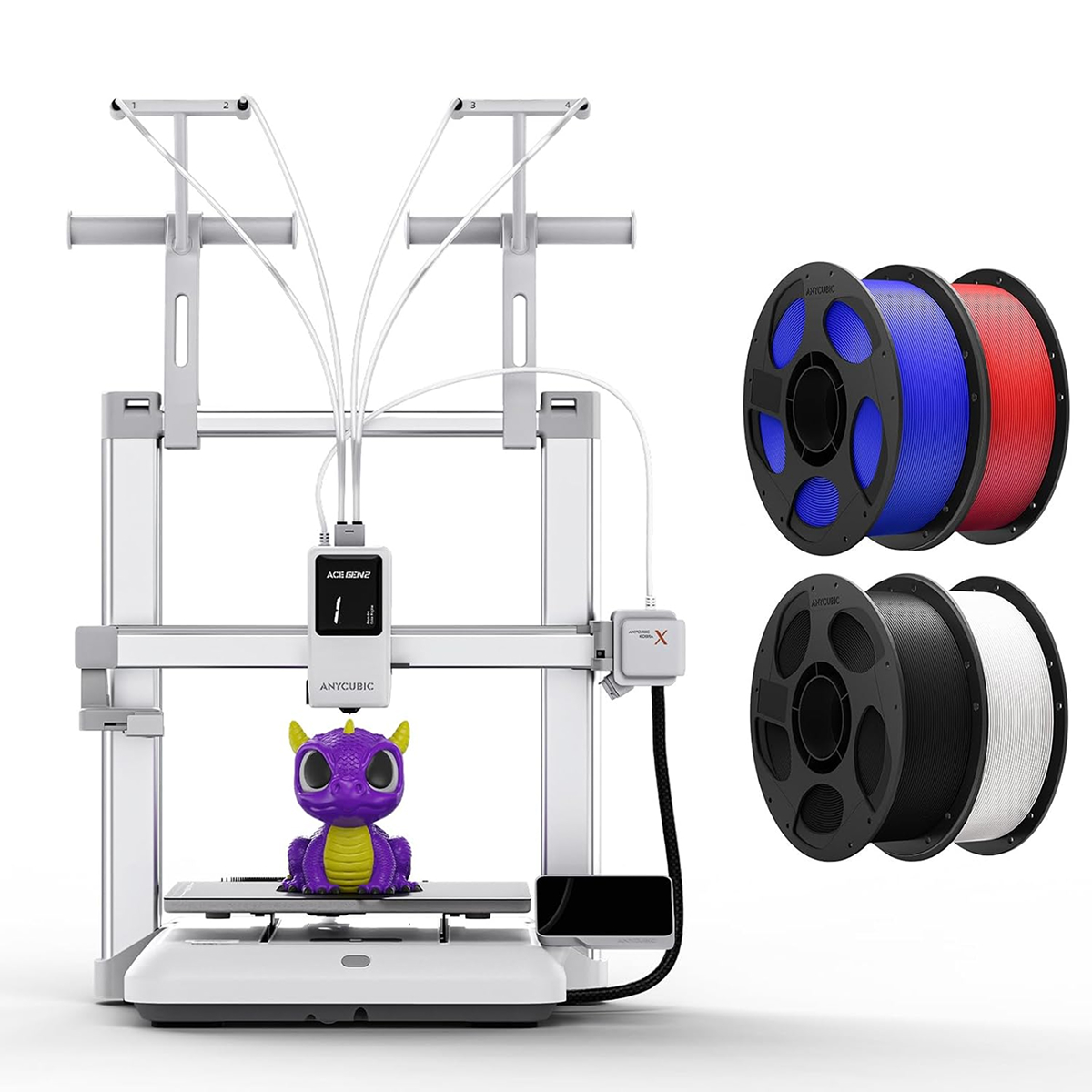
The Anycubic 3D Printer revolutionizes creative desktop making by delivering vibrant multi-material extrusion directly to home workshops. It can run a standard four-color layout out of the box and seamlessly scales up to nineteen colors utilizing compatible auxiliary material hubs. This hardware unlocks sophisticated chromatic gradients, artistic figurines, and functional two-tone prototypes without requiring grueling manual filament changes during complex print cycles.
Accelerating output dramatically, the printer attains a blistering 600mm/s maximum speed while keeping structural detail exceptionally sharp. The motion system relies on modern Kobra OS firmware and advanced vibration compensation to prevent ghosting or layer shifting across tall models. An adaptive extrusion force compensator handles everything from rigid PLA up to flexible 68D TPU materials, eliminating uneven flow and nozzle jams across changing print densities.
Setting up the machine takes only fifteen minutes thanks to a thoughtful semi-assembled modular chassis design. The integrated LeviQ 3.0 auto bed leveling system performs a thorough 49-point matrix scan, creating a flawless first layer across the heated build plate. Beginners can avoid the frustrating learning curve of manual bed adjustments, knowing the optical sensors and software compensations guarantee ideal squish and reliable foundation adhesion automatically.
Operating at sound levels below forty-eight decibels, this hardware performs quietly in communal living areas, dorms, and classrooms. Integrated power-loss recovery algorithms and smart filament run-out detection sensors prevent catastrophic print failures during extensive multi-day fabrication jobs. When unexpected outages strike or spools run dry, the machine gracefully pauses execution, saving valuable materials and protecting ambitious long-running design projects from sudden ruin.
Pros
- Vivid nineteen-color printing capability support
- Extreme velocity up to 600mm/s
- Automated 49-point matrix bed leveling
- Adaptive extrusion handles flexible TPU filaments
- Whisper-quiet acoustic operation under 48dB
- Integrated vibration compensation eliminates ghosting
- Rapid fifteen-minute out-of-the-box assembly
Cons
- Significant footprint demands large desktop space
- Multicolor purging creates extra filament waste
Top Pick #2
Overall Grade
B
Why We Chose It
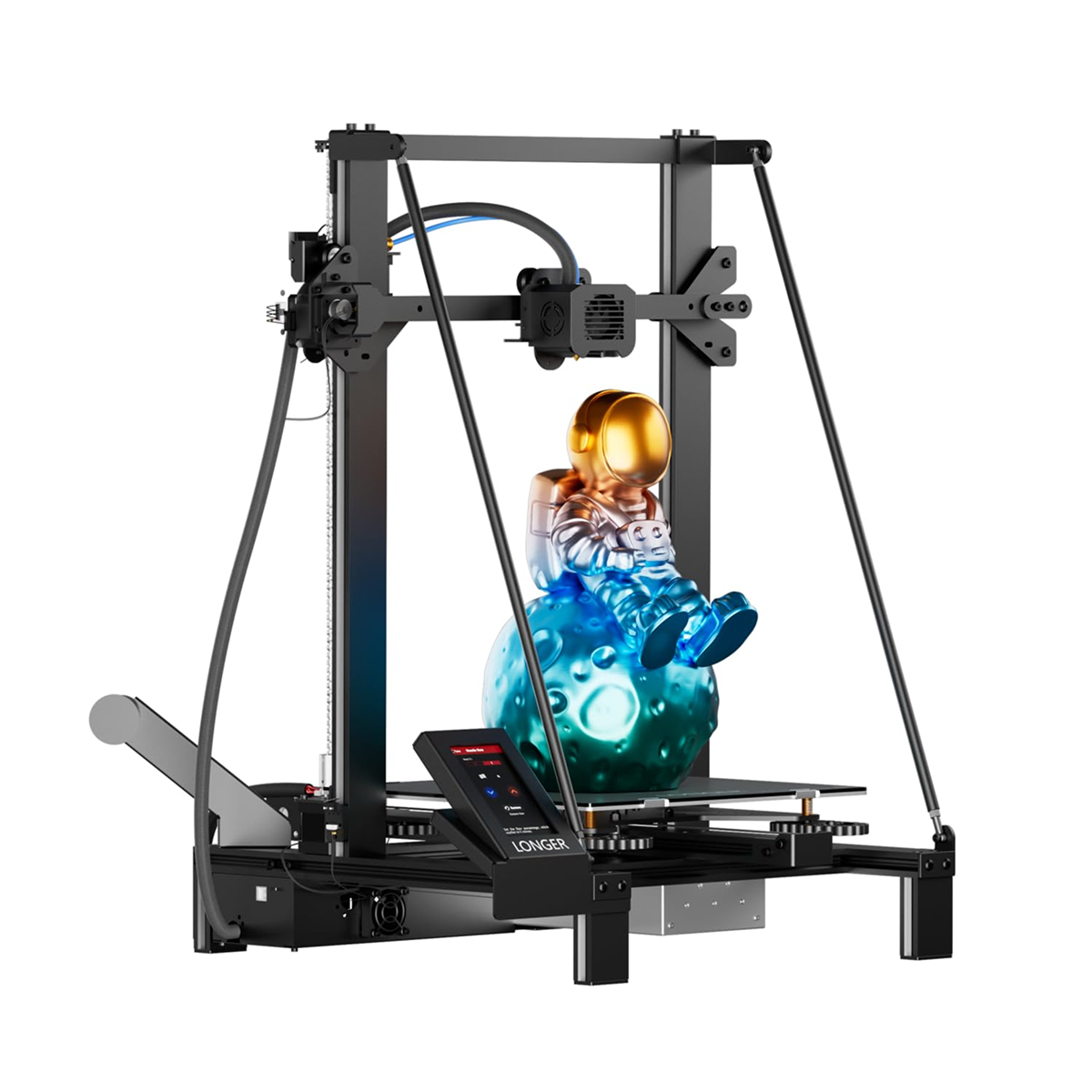
The LGT Longer 3D Printer is an exceptional powerhouse tailored for makers seeking a massive 300x300x400mm print volume on a reasonable budget. Its reinforced diagonal support rods create a rigid triangular architectural frame that dramatically stiffens the high Z-axis uprights. This structural stabilization effectively eliminates unwanted wobble and vibration, yielding consistently clean vertical layers on towering life-sized props, mechanical housings, and expansive artistic sculptures.
Extrusion cooling performance receives a tremendous boost from the factory-installed upgraded dual blower kit positioned directly over the hotend assembly. By rapidly chilling freshly deposited plastic along intricate bridging spans and sharp overhangs, the airflow completely suppresses thermal deformation and annoying wire drawing. The flat lattice glass build platform provides superb thermal uniformity across its entire perimeter, allowing completed models to pop free effortlessly after cooling down.
Commanding this large-format machine is remarkably intuitive thanks to an expansive responsive 4.3-inch color touchscreen mounted right onto the metal frame. The streamlined visual user interface replaces outdated mechanical rotary knobs, presenting live thermal telemetry, real-time printing percentages, and coordinate positions clearly. Furthermore, the pre-assembled chassis arrives ninety percent constructed, allowing users to complete basic frame bolting and wire connections in less than an hour.
Underneath the hood, the open-source firmware architecture runs atop TMC2208 ultra-silent motor drivers that reduce acoustic stepper whine to near silence. Makers are fully empowered to modify operational G-code parameters, install custom firmware builds, or mount after-market automatic bed leveling accessories without voiding platform potential. Combined with functional print resumption safeguards and mechanical filament sensors, this printer serves as a dependable workhorse for ambitious maker projects.
Pros
- Expansive large-format build volume capacity
- Dual blower cooling prevents layer deformation
- Rigid triangular chassis dampens Z-wobble
- TMC2208 drivers ensure silent motion control
- Removable lattice glass offers effortless release
- Open-source firmware supports custom upgrades
Cons
- Manual bed leveling requires user patience
- Large structural footprint demands dedicated tables
- Heating massive glass bed takes time
Top Pick #3
Overall Grade
C+
7.7/10
Why We Chose It
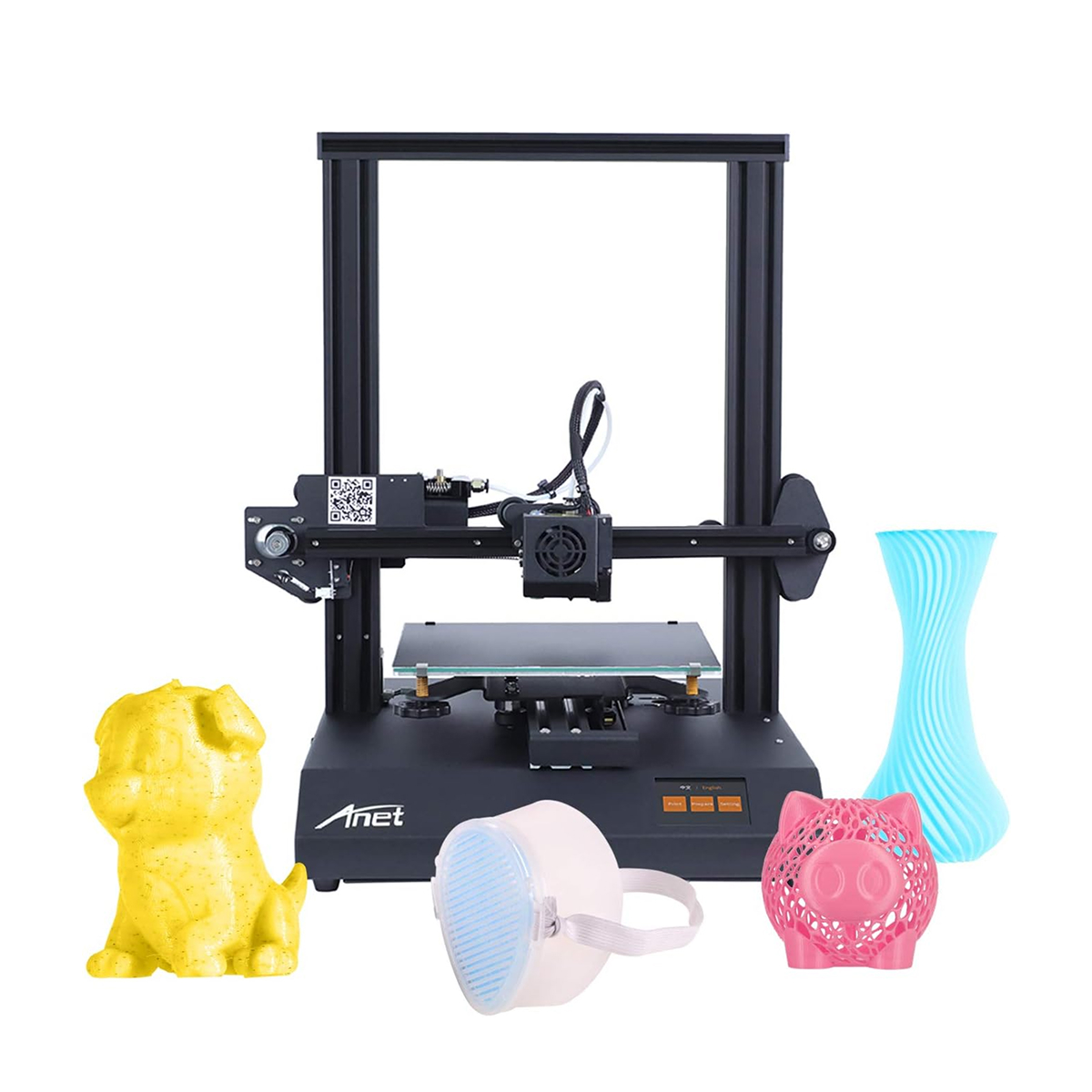
The Anet 3D Printer strikes a superb balance between durable industrial build quality and accessible entry-level mechanics. Built around a rigid all-metal aluminum frame, the printer resists mechanical deflection and environmental wear across hundreds of operating hours. Pre-assembled modular sub-assemblies allow users to complete the physical setup in approximately ten minutes, creating a fast route from initial unboxing to producing functional real-world plastic parts.
Achieving a reliable first layer is straightforward thanks to an integrated photoelectric induction auto-leveling sensor that scans across twenty-five coordinates. This matrix system dynamically logs minor bed imperfections, allowing the firmware to calculate precision Z-axis height compensations automatically before material deposition begins. Users no longer need to rely exclusively on feeler gauges or paper sheets, resulting in higher print success rates and fewer initial adhesion problems.
Internally, the motherboard features advanced TMC2208 silent motor chips boasting 256 micro-step subdivisions for whisper-quiet travel moves. This driver upgrade replaces legacy, buzzing motor controllers, generating remarkably smooth motion kinematics that enhance dimensional wall quality and eliminate unsightly acoustic resonance. Combined with convenient one-click automatic filament loading and unloading routines, swapping between fresh spools of PLA material feels completely frictionless and reliable.
Controlling the hardware is facilitated by a clear vibrant 2.8-inch touchscreen display, which organizes file directories and thermal readings logically. The system supports direct offline firmware upgrades through the provided eight-gigabyte memory card, keeping the electronics modern and stable without requiring tethered computer cables. Automatic filament run-out detection and robust resume printing functions round out the hardware, protecting every print job from sudden power interruptions.
Pros
- Ten-minute rapid modular hardware assembly
- Photoelectric twenty-five-point automatic leveling sensor
- Whisper-quiet TMC2208 micro-stepping drivers
- Rugged industrial aluminum structural profile
- One-click motorized filament feeding control
- Reliable power outage resume print recovery
Cons
- Touchscreen interface is somewhat small
- Bed temperatures struggle with high-temp nylon
- Stock cooling fan exhibits moderate noise
- Manual spool holder positioning is awkward
Top Pick #4
Overall Grade
C
7.4/10
Why We Chose It
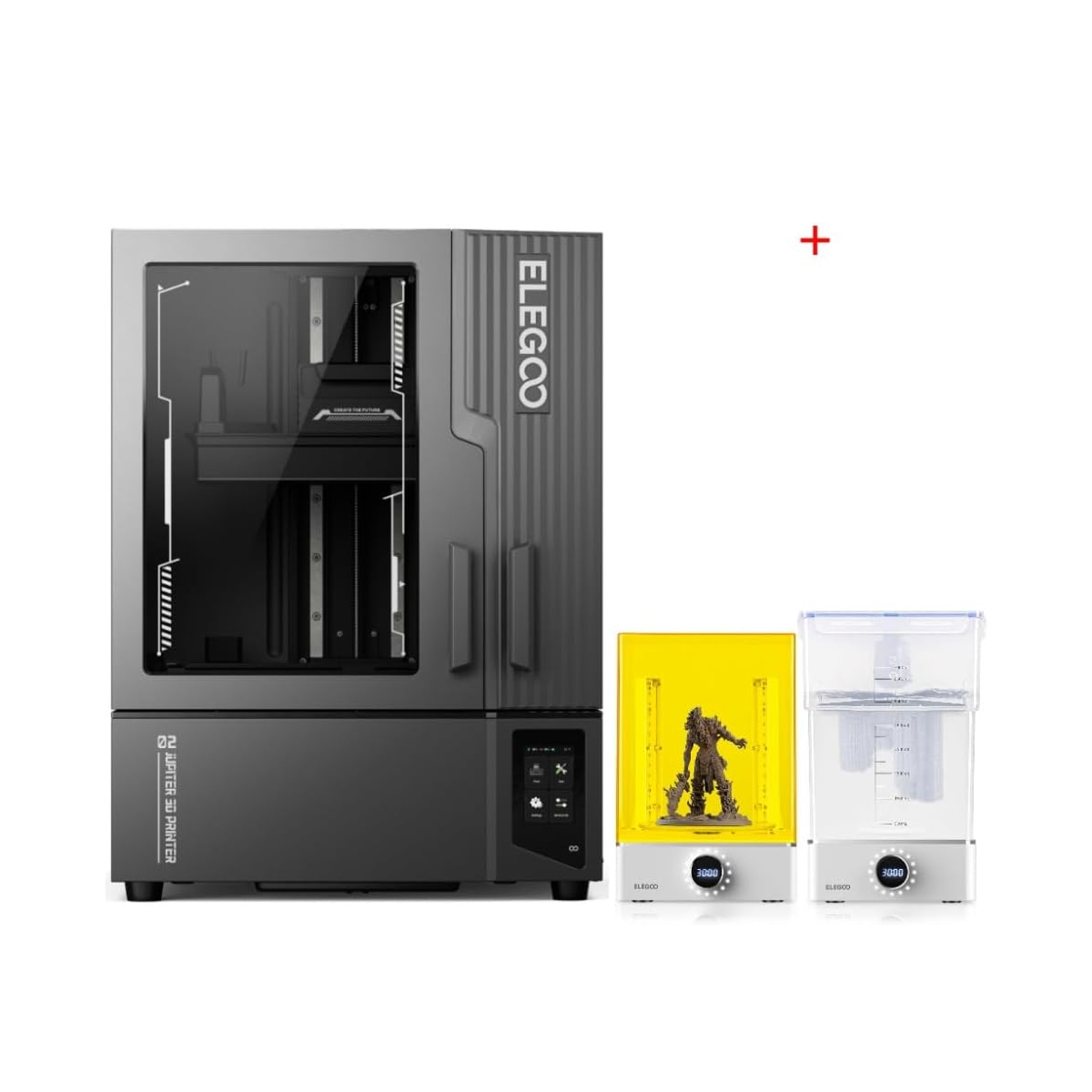
The ELEGOO 3D Printer bundle redefines high-definition manufacturing by pairing an expansive photopolymer printer with dedicated post-processing stations. Unlike traditional filament devices, this stereolithography powerhouse utilizes a high-precision UV light engine to cure liquid resin into microscopic, hair-thin solid layers. The resulting parts demonstrate invisible layer boundaries and glassy smooth surfaces, making this platform ideal for detailed tabletop miniatures, fine jewelry designs, and intricate dental prototypes.
What sets this manufacturing package apart from standalone units is the comprehensive inclusion of the Mercury X wash and cure station. Managing messy chemical solvents and sticky raw prints becomes a tidy, controlled process inside dedicated agitation tanks and omnidirectional curing chambers. Creators can wash off uncured surface liquid and post-cure models under uniform rotating ultraviolet LEDs without purchasing auxiliary equipment or getting harmful resin on their workbenches.
Physical reliability remains rock-solid throughout extensive printing runs due to a heavy-duty all-metal chassis and reinforced dual linear lead screws. This rigid structural architecture eliminates subtle layer shifting on heavy, dense resin sculpts, ensuring microscopic geometric fidelity across the entire platform. The expansive vat holds generous quantities of standard, plant-based, water-washable, or tough functional photopolymers, letting users fabricate bold large-format assemblies in a single uninterrupted operation.
While working with photosensitive chemicals necessitates dedicated safety gear, proper room ventilation, and careful handling, the system rewards users with unrivaled surface finish quality that no conventional filament printer can emulate. The intuitive front touchscreen streamlines initial plate zeroing, vat exposure tests, and job launching. For detail-focused artists and technical prototype developers needing surgical precision, this bundle delivers a complete, professional stereolithography environment.
Pros
- Unsurpassed micro-detail and surface smoothness
- Bundled Mercury X wash and cure stations
- Expansive resin vat and build dimensions
- Heavy-duty all-metal reinforced frame stability
- Compatible with diverse engineering resin types
Cons
- Requires dedicated safety gloves and ventilation
- Messy liquid resin handling and cleaning
- Considerable space needed for three machines
- Higher recurring costs for isopropyl alcohol
- Cured parts require delicate support clipping
Top Pick #5
❓What Are 3d Printer?
A 3D printer is an advanced computer-controlled desktop additive manufacturing machine that builds physical three-dimensional items directly from digital computer-aided design (CAD) blueprints. Instead of cutting down material like traditional subtractive CNC milling, it builds objects layer by microscopic layer.
Most consumer setups operate through fused deposition modeling (FDM), heating thermoplastic spools like PLA, PETG, or TPU and squeezing them out through tiny brass nozzles. Other precision devices rely on stereolithography (SLA) technology, using targeted ultraviolet light to solidify photopolymer liquid resin vats.
These versatile tools have quickly grown from exclusive industrial laboratories into mainstream workshops, domestic offices, and school classrooms worldwide. Modern automated calibration sensors and pre-configured slicing software profiles allow hobbyists to transform abstract ideas into tangible functional prototypes within a few hours.
Whether creating durable mechanical replacement gears, unique home interior organizers, architectural models, or artistic character miniatures, owning a desktop printer provides limitless creative manufacturing capability right on your personal workstation.
🎯 Key Features & Advantages: 3d Printer
- Rapid prototyping transforms digital CAD files into physical plastic models within hours.
- Cost-effective custom manufacturing eliminates expensive shipping fees for replacement household parts.
- On-demand production reduces physical inventory storage needs by creating items whenever required.
- Unmatched geometric freedom allows users to construct hollow shapes and complex internal channels.
- Educational STEM enrichment teaches kids practical structural engineering, design thinking, and spatial mathematics.
- Customizable material properties support flexible rubbers, durable mechanical blends, or wood-infused composites.
- Personalized artistic expression enables makers to fabricate bespoke artistic jewelry, toys, and custom gifts.
🔍 Smart Buying Guide: 3d Printer
- Physical build volume determines the maximum single-piece dimension you can fabricate without cutting.
- Automatic bed leveling sensors save hours of tedious manual calibration and failed first layers.
- Nozzle temperature limits determine your ability to melt demanding engineering plastics like nylon.
- Acoustic noise ratings ensure the printer operates quietly without disturbing domestic living areas.
- Firmware recovery systems protect lengthy print progress from sudden electrical household power cuts.
- Software slicer compatibility ensures seamless file preparation with open-source tools like CURA.
⚠️ Smart Shopper Alert: 3d Printer
- Ignoring automated bed leveling leads to catastrophic first-layer detachment and nozzle clogs.
- Overlooking proper room ventilation when handling smelly resin or advanced styrene materials.
- Purchasing overly complex DIY printer kits that require daunting electrical wiring from scratch.
- Skimping on quality filament spools causes frustrating moisture-induced popping and inconsistent extrusion.
