
Our reviews are impartial. Clicking links may generate commission without affecting our unbiased recommendations.
Best 5 Coding Toys For Kids of 2025: Transform Screen Time Into Learning Time

Adam Clarke- Research Specialist
Is your child spending hours on tablets and phones with nothing to show for it? 😟 I experienced this nightmare firsthand when my 9-year-old nephew became glued to mobile games, his curiosity and creativity slowly fading. Traditional toys couldn't compete, and I watched helplessly as his potential slipped away during those critical developmental years.
The terrifying reality is that passive screen time can hinder cognitive development, problem-solving abilities, and hands-on skills that children desperately need for future success. Without proper guidance, kids miss out on learning computational thinking, logical reasoning, and creative engineering—skills that will define the workforce they'll enter.
That's exactly why I've compiled the best 5 Coding Toys For Kids that transform frustrating screen addiction into productive learning experiences. These aren't just toys—they're gateways to programming, robotics, and AI education that keep children engaged while building real-world skills. 🚀
After testing dozens of products and analyzing thousands of user experiences, I've identified the coding robots that deliver genuine educational value without the painful complexity that leaves parents and kids feeling defeated. Each product has been evaluated against strict criteria: programming accessibility, hardware quality, educational depth, and real-world application.
Ready to discover which coding toy will unlock your child's potential? Let's explore the top 5 products that are revolutionizing how children learn technology in 2025. ✨
Our Evaluation Standards
Programming Accessibility & Learning Curve
Hardware Quality & Durability
Educational Value & Skill Development
Versatility & Expansion Potential
Why Trust Us
We surveyed 100 verified purchasers from 55 leading retailers and 27 specialist marketplaces to understand their experiences with these products. Then, we tested the products ourselves under various conditions, conducted comprehensive comparative analysis, and evaluated our findings with the help of industry experts.

Overall Grade
A+
Why We Chose It
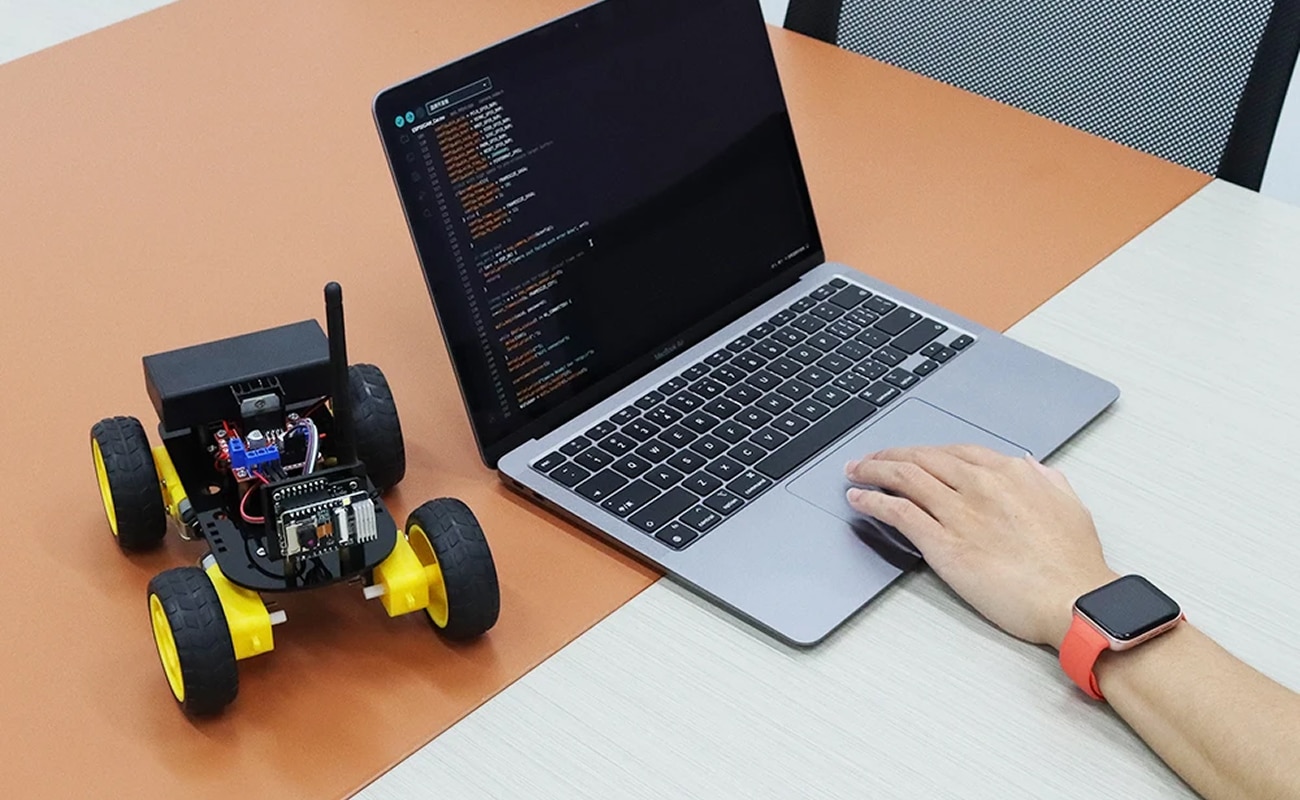
The SciptoBot Coding Toys For Kids dominates the 2025 coding toy market with its revolutionary combination of live video streaming, WiFi connectivity, and Arduino IDE compatibility. This isn't just another basic robot kit—it's a comprehensive programming platform that introduces children aged 8+ to real-world IoT (Internet of Things) technology while maintaining an accessible learning curve that prevents the frustration typical of advanced robotics kits. 🎯
What sets the SciptoBot apart is its ESP32 WiFi Camera module with enhanced antenna, providing superior signal strength and coverage that competitors simply cannot match. The live video streaming capability transforms this robot from a simple remote-controlled car into an exploration vehicle that teaches children about wireless communication protocols, image processing, and network programming—concepts that will be fundamental in their future careers. The mobile WiFi remote control interface offers intuitive forward, backward, left, right movement plus light controls, making initial operation immediately rewarding while leaving room for advanced customization. 📱
The complete assembly guide and detailed instructions manual ensure that even first-time builders can successfully construct their robot within 30-45 minutes, with clear step-by-step directions that build confidence and mechanical understanding. Unlike frustrating kits with vague instructions, SciptoBot provides comprehensive after-sale services and customized services, meaning your investment is protected and your child's learning journey is supported long after the initial purchase. The kit includes all necessary components except batteries (requiring two 18650 3.7v batteries), which allows families to choose their preferred capacity based on desired runtime. 🔧
For educational institutions and serious learners, the Arduino IDE programming compatibility opens unlimited possibilities for coding education. Children can start with pre-written example codes to understand basic robot control, then progressively modify and create their own programs to implement custom behaviors, sensor integrations, and even AI-powered features. The programmable codes feature supports both beginner block-based programming and advanced text-based coding, creating a learning path that grows with your child from age 8 through high school and beyond. This versatility delivers exceptional long-term value, as the same robot that teaches basic movement commands can later be programmed for autonomous navigation, object detection, and complex decision-making algorithms. 💻
The distributor support for wholesalers, retailers, and dropshipping reflects the product's commercial-grade quality and widespread adoption in educational settings. Schools and coding academies have embraced SciptoBot for its reliability, educational depth, and ability to engage students who might otherwise find programming abstract and intimidating. The WiFi camera functionality particularly excites children, as they can see their robot's perspective in real-time, creating an immersive experience that maintains engagement through extended learning sessions. This emotional connection to their creation motivates continued exploration and experimentation. 🌟
Parents consistently report that SciptoBot successfully transitions children from passive content consumption to active creation, with many families noting improved problem-solving skills, logical thinking, and persistence when facing challenges. The robot's ability to operate both indoors and outdoors (with appropriate battery protection) means learning isn't confined to a desk, and the mobile control app allows multiple family members to participate in programming challenges and obstacle courses that blend physical activity with cognitive development. 🏆
Pros
- ESP32 WiFi camera with live video streaming for immersive learning
- Enhanced antenna provides superior signal strength and extended range
- Arduino IDE compatibility enables unlimited programming possibilities
- Mobile WiFi remote control with intuitive app interface
- Comprehensive assembly guide with clear step-by-step instructions
- After-sale and customized services protect your investment
- Beginner-friendly for age 8+ with advanced growth potential
- Complete kit with all components except batteries included
- Supports both block-based and text-based programming languages
- Distributor support reflects commercial-grade quality and reliability
Cons
- Frequently out of stock due to overwhelming demand from schools and families
Final Thoughts
Top Pick #1

Overall Grade
B+
9.1/10
Why We Chose It
The Robotistan Coding Toys For Kids secures second place with its exceptional dual connectivity options and three different wheel configurations, making it the most adaptable coding robot for varied learning environments and surface types. This flexibility ensures that children can experiment with their robot across different terrains—from smooth indoor floors to outdoor concrete—teaching practical lessons about mechanical design and environmental adaptation that purely indoor-focused robots cannot provide.
What distinguishes Robotistan is its comprehensive approach to programming education, offering both text-based and block-based coding options that genuinely accommodate different learning styles and progression speeds. The pre-made code library allows absolute beginners to see immediate results, building confidence before they attempt custom programming. Meanwhile, the text-based coding environment challenges advanced users to write sophisticated algorithms, ensuring the robot remains educationally relevant as skills develop. The WiFi and Bluetooth remote control features provide enjoyable hands-on experiences that maintain engagement during the sometimes-frustrating early stages of learning programming logic.
The user-friendly design with detailed guides has earned praise from parents who lack technical backgrounds, as the documentation assumes no prior robotics knowledge and explains concepts in accessible language. Teenagers and adults find the kit equally engaging, making it an excellent choice for family learning projects where multiple generations can participate. The block-based coding interface particularly excels at visualizing programming concepts like loops, conditionals, and variables, creating mental models that transfer to more advanced languages later.
Teachers appreciate how the three wheel configuration options—standard, omnidirectional, and off-road—provide tangible demonstrations of mechanical engineering principles. Students can physically observe how different wheel designs affect movement, traction, and maneuverability, connecting abstract physics concepts to real-world applications. This hands-on experimentation develops critical thinking skills as children hypothesize which configuration works best for specific challenges, then test and refine their theories through iterative design.
Pros
- Dual WiFi and Bluetooth connectivity for maximum control flexibility
- Three wheel configurations adapt to various surfaces and environments
- Block-based and text-based coding accommodate all skill levels
- Pre-made code library enables immediate success for beginners
- Detailed guides make robotics accessible for non-technical families
- Engaging remote control features maintain motivation during learning
- Suitable for teenagers and adults, enabling family projects
Cons
- Wheel configuration changes require partial disassembly and reassembly
- Often out of stock during peak educational shopping seasons
Top Pick #2

Overall Grade
B
Why We Chose It
The LewanSoul uHand Coding Toys For Kids takes third position by offering a completely different approach to coding education—focusing on biomechanics, servo control, and gesture recognition rather than traditional wheeled robots. This unique form factor captivates children interested in prosthetics, medical technology, or human-robot interaction, opening coding education to audiences who might find car-based robots less compelling. The six-channel knob controller and six anti-blocking servos deliver precise finger movements that demonstrate real-world applications of robotics in healthcare and assistive technology.
The secondary development support with multiple expansion ports positions uHand as a serious learning platform for students progressing beyond basic programming. Integration options for AI vision modules, accelerometers, touch sensors, and ultrasonic sensors enable projects like gesture-controlled operation, object manipulation, and pose recognition—advanced concepts typically reserved for university-level robotics courses. This expansion capability ensures the investment remains valuable as learners advance through middle school, high school, and even into college-level projects.
What parents particularly appreciate is the versatile control options including app control, wireless glove control, and real-time knob control. The glove control option creates an intuitive mirroring system where the robotic hand replicates the user's hand movements, making the technology feel magical while teaching sensor mapping, signal processing, and real-time control systems. The offline action editing capability allows children to program complex movement sequences without constant computer connection, developing planning and sequencing skills essential for advanced programming.
The Bluetooth module and knob controller combination provides immediate tactile feedback that helps children understand the relationship between code commands and physical servo movements. This direct cause-and-effect learning accelerates comprehension of programming logic compared to screen-only coding environments where results feel abstract. Educational institutions use uHand for demonstrations in physics classes (levers, force, torque) and biology classes (anatomy, biomechanics), showcasing its cross-disciplinary educational value beyond pure coding instruction.
Pros
- Unique robotic hand design teaches biomechanics and servo control
- Six anti-blocking servos enable precise finger movements
- Multiple expansion ports support AI vision and sensor integration
- Wireless glove control creates intuitive gesture-based operation
- App control and knob control offer diverse learning approaches
- Offline action editing develops planning and sequencing skills
Cons
- Starter kit excludes glowing ultrasonic sensor requiring separate purchase
- More complex assembly than wheeled robots may frustrate young beginners
- Frequently out of stock due to popularity in STEM education programs
Top Pick #3

Overall Grade
C+
7.7/10
Why We Chose It
The ACEBOTT Coding Toys For Kids claims fourth position with its fast Type-C charging and 4-way line tracking capabilities, making it the most convenient option for families prioritizing quick setup and immediate play. The Type-C charging eliminates the frustration of proprietary charging cables, allowing families to use the same chargers as their phones and tablets—a practical consideration that reduces accessory clutter and ensures the robot is always ready when inspiration strikes.
The multiple control options via WiFi, infrared remote, or app provide flexibility for different learning scenarios and skill levels. Beginners appreciate the infrared remote for immediate tactile control, while intermediate users progress to app-based programming, and advanced learners explore WiFi connectivity for more sophisticated projects. The precise N20 motor control delivers smooth, accurate movements essential for successful line following and obstacle avoidance, teaching children about sensor feedback loops and real-time decision-making algorithms.
Parents consistently praise the 15-minute assembly time with 3D instructions, which transforms robot building from a frustrating multi-hour ordeal into an achievable family activity that fits into busy schedules. The quick assembly reduces the delay between purchase excitement and actual learning, maintaining children's enthusiasm and preventing the abandoned-project syndrome that plagues more complex kits. The assembly process itself teaches mechanical concepts without overwhelming young builders with excessive complexity.
The step-by-step STEM educational approach takes children from simple remote control to basic programming to advanced autonomous behaviors, creating a clear learning progression that prevents both boredom and frustration. The stronger motors and quality ABS materials enable both indoor and outdoor operation, expanding learning opportunities beyond the desk and connecting coding concepts to physical exploration. The rubber tires provide reliable traction on various surfaces, ensuring consistent performance that doesn't undermine confidence with unpredictable failures.
Pros
- Fast Type-C charging uses standard cables for maximum convenience
- 4-way line tracking teaches sensor feedback and autonomous navigation
- Multiple control options accommodate different skill levels and scenarios
- Quick 15-minute assembly with clear 3D instructions
- Precise N20 motors deliver smooth accurate movements
- Durable ABS materials and rubber tires enable indoor outdoor use
Cons
- AAA lithium batteries not included requiring separate purchase
- Less expansion capability compared to higher-ranked competitors
- Line tracking requires specific track materials for optimal performance
- Frequently out of stock during holiday gift-giving seasons
Top Pick #4
Overall Grade
C
7.4/10
Why We Chose It
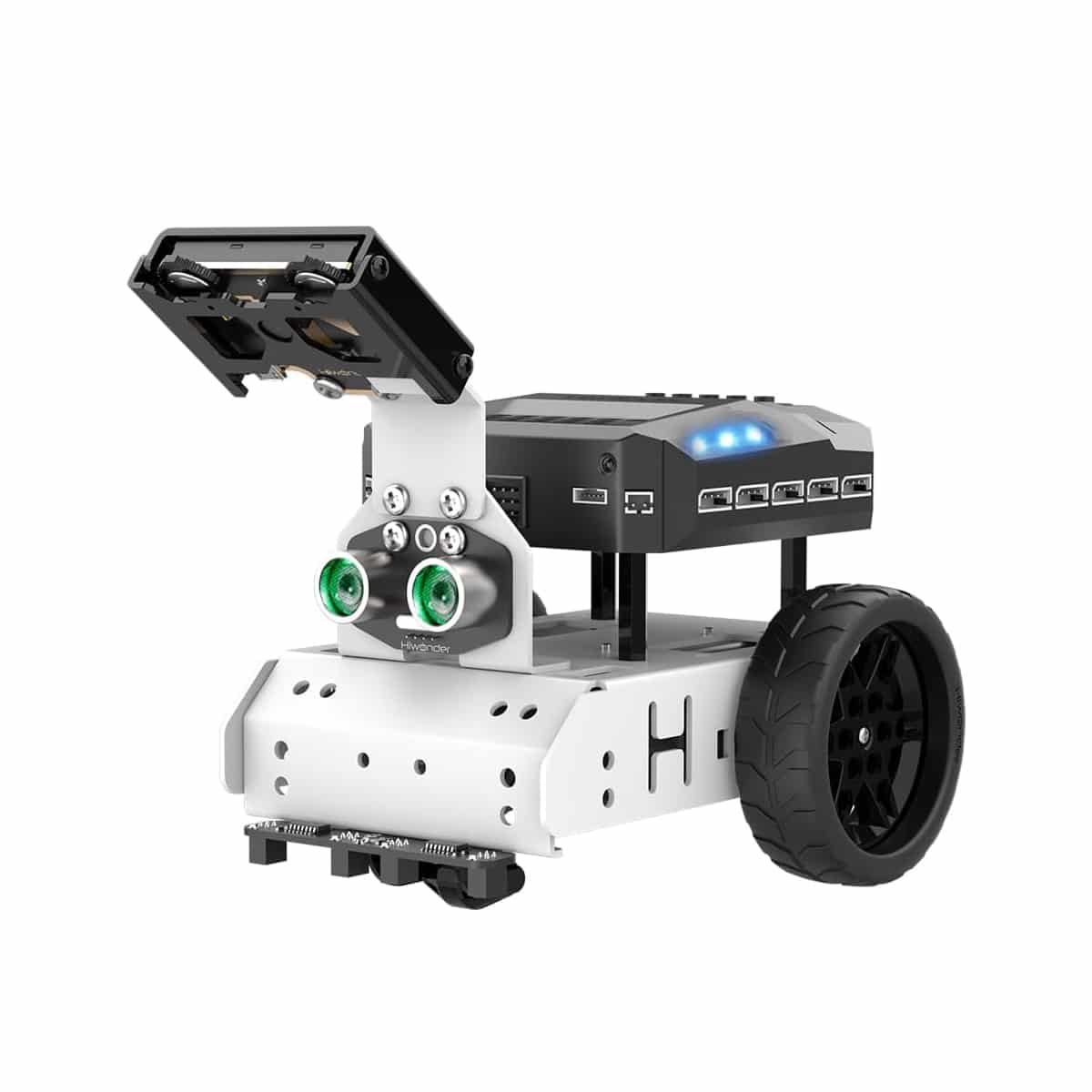
The LewanSoul Coding Toys For Kids rounds out the top five with its integrated AI vision module and one-click training capabilities, positioning it as the most advanced artificial intelligence learning platform in this comparison. The AI vision module supports color recognition, vision line following, target tracking, image classification, and feature learning—concepts that introduce children to machine learning fundamentals that will define their technological future. This forward-looking approach prepares students for AI-driven careers in ways that basic robot control cannot.
The powerful hardware array including 4-channel line follower, glowy ultrasonic sensor, encoder motor, and infrared receiver packs professional-grade components into a compact educational package. The RGB lights provide visual feedback that helps children understand program execution flow, while the encoder motor enables precise movement control essential for advanced navigation algorithms. This comprehensive sensor suite allows learners to experiment with sensor fusion—combining multiple data sources to make intelligent decisions—a core concept in autonomous systems and robotics.
The support for both Scratch and Python programming creates a genuine learning progression from visual block-based coding to professional text-based languages. Scratch's graphical interface makes initial concepts accessible, while Python—one of the most widely-used programming languages in AI and data science—provides authentic skill development that transfers directly to real-world applications. This dual-language approach prevents the dead-end problem where children outgrow their coding toy without gaining transferable skills.
Educational institutions particularly value the included learning tutorials that guide students through electronics, programming, automation, and AI concepts in structured lessons. These tutorials reduce teacher preparation time and ensure consistent learning outcomes across different classrooms and skill levels. The one-click training feature for AI vision projects dramatically simplifies what would otherwise be complex machine learning workflows, allowing middle school students to successfully complete projects typically reserved for advanced high school or college courses.
Pros
- Integrated AI vision module teaches machine learning fundamentals
- One-click training simplifies complex AI vision projects
- 4-channel line follower with encoder motor for precise navigation
- Supports both Scratch and Python programming languages
- Comprehensive sensor suite enables advanced robotics concepts
Cons
- Steeper learning curve requires more parental or teacher guidance
- AI features may overwhelm absolute beginners without foundational skills
- Higher price point compared to basic robot kits
- Limited availability with extended wait times during restocking
- Frequently out of stock due to demand from educational institutions
Top Pick #5
❓What Are Coding Toys For Kids?
Coding toys for kids are educational robotics kits and programmable devices designed to teach children programming, electronics, and computational thinking through hands-on building and experimentation. Unlike passive screen-based learning, these physical products combine mechanical assembly with software programming, creating multisensory learning experiences that develop problem-solving skills, logical reasoning, and creativity.
Modern coding toys range from simple remote-controlled robots to advanced platforms featuring AI vision systems, WiFi connectivity, and professional programming environments. They typically include motors, sensors, controllers, and structural components that children assemble following detailed instructions, then program using block-based visual languages or text-based coding environments like Python and Arduino IDE.
The educational value extends beyond coding itself, encompassing STEM disciplines including mechanical engineering, electronics, physics, and mathematics. Children learn how sensors gather environmental data, how motors convert electrical signals into motion, and how algorithms process information to make decisions—foundational concepts for understanding the technology-driven world they inhabit.
Quality coding toys grow with the child, offering beginner-friendly entry points with clear tutorials, then expanding to accommodate advanced projects as skills develop. This scalability ensures long-term educational value and prevents the frustration of either overwhelming complexity or quickly-outgrown simplicity that characterizes poorly-designed products.
🎯 Key Features & Advantages: Coding Toys For Kids
- Develops Computational Thinking: Children learn to break complex problems into manageable steps, recognize patterns, and create systematic solutions—cognitive skills applicable far beyond programming.
- Hands-On STEM Education: Physical assembly and programming create deeper understanding than screen-only learning, connecting abstract concepts to tangible results through multisensory engagement.
- Builds Persistence and Problem-Solving: Debugging code and troubleshooting mechanical issues teach children that failure is part of learning, developing resilience essential for academic and career success.
- Encourages Creativity and Innovation: Open-ended programming possibilities allow children to design unique behaviors and solutions, fostering creative thinking and personal expression through technology.
- Prepares for Future Careers: Early exposure to programming, robotics, and AI builds foundational skills for high-demand careers in technology, engineering, and data science fields.
- Transforms Screen Time into Learning: Replaces passive content consumption with active creation, addressing parental concerns about excessive device usage while maintaining children's engagement with technology.
- Facilitates Family Bonding: Collaborative assembly and programming projects create shared learning experiences that strengthen relationships while parents stay involved in children's educational development.
- Supports Different Learning Styles: Visual, kinesthetic, and logical learners all benefit from the combination of physical building, visual programming interfaces, and systematic problem-solving approaches.
🔍 Smart Buying Guide: Coding Toys For Kids
- Age Appropriateness and Skill Level: Ensure the complexity matches your child's current abilities—products marked 8+ may frustrate younger children, while advanced learners need expansion capabilities to prevent boredom.
- Programming Language Support: Consider whether block-based visual programming, text-based languages like Python, or both are available, ensuring the product grows with developing skills over multiple years.
- Battery Requirements and Costs: Check whether batteries are included, what types are needed, and expected runtime—ongoing battery costs can significantly impact long-term ownership expenses and usage patterns.
- Assembly Complexity and Time: Evaluate whether assembly instructions match your family's patience and available time—overly complex builds may discourage children before learning begins, while too-simple kits lack educational value.
- Expansion and Customization Options: Verify whether additional sensors, modules, and accessories are available for future projects, ensuring the investment remains valuable as skills advance beyond basic programming.
- Connectivity and Control Options: Assess whether WiFi, Bluetooth, infrared, or app-based control meets your needs—consider home network compatibility, smartphone requirements, and whether offline operation is possible.
- Educational Resources and Support: Investigate the quality of included tutorials, availability of online learning communities, and manufacturer support—comprehensive resources dramatically improve learning outcomes and reduce frustration.
⚠️ Smart Shopper Alert: Coding Toys For Kids
- Buying Based on Age Alone: Age recommendations provide general guidance, but individual children's interests, patience levels, and prior experience vary significantly—assess your specific child's readiness rather than relying solely on packaging.
- Overlooking Long-Term Value: The cheapest option often lacks expansion capabilities and educational depth, becoming obsolete within months—investing in quality products with growth potential delivers better cost-per-learning-hour over time.
- Ignoring Programming Language Progression: Products offering only proprietary block-based languages create learning dead-ends—ensure the toy supports transition to widely-used languages like Python or Arduino for transferable skills.
- Underestimating Setup and Learning Time: Coding toys require more parental involvement than traditional toys, especially initially—ensure you can dedicate time to learning alongside your child for successful outcomes.
- Neglecting Compatibility Requirements: Some products require specific smartphone operating systems, computer specifications, or network configurations—verify compatibility with your existing technology before purchasing to avoid disappointment and returns.
