
Our reviews are impartial. Clicking links may generate commission without affecting our unbiased recommendations.
Best 5 Telescopes for Beginners of 2026: Clear Stargazing and Celestial Views

Noah Bishop- Research Specialist
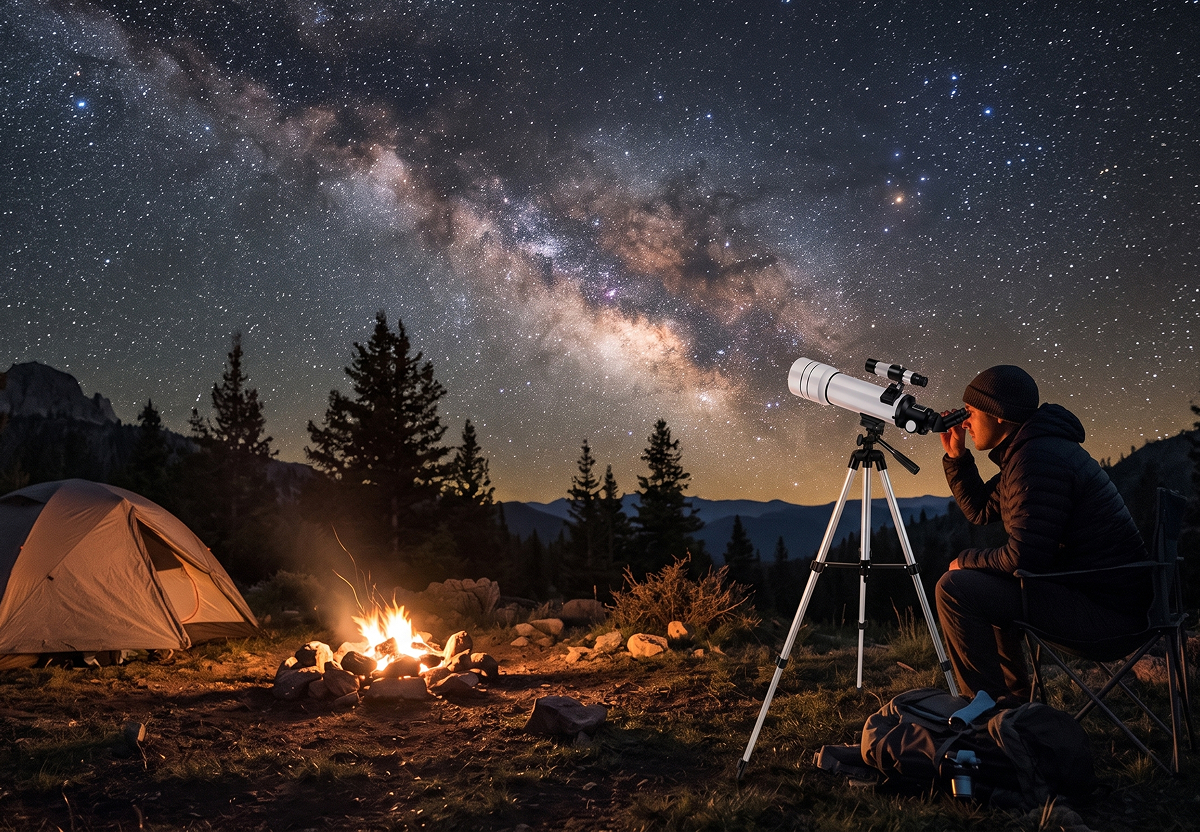
Attempting to explore the night sky with inferior optics is a truly painful and frustrating ordeal. 🌌 I experienced an absolute nightmare when using an outdated starter scope; attempting to align the moon felt impossible, resulting in blurry smears that left my eager family utterly disappointed.
Trying to select the right optical instrument from countless generic options can feel terrifying for newcomers. Beginners often encounter wobbly mounts, dim lenses, and difficult alignment systems that quickly turn exciting weekend stargazing into an annoying waste of time.
Without a reliable optical setup, you risk experiencing the worst stargazing letdown: spending hours outside in freezing temperatures only to see pitch-black emptiness instead of brilliant lunar craters. 🔭 Our detailed guide presents the best 5 telescopes for beginners to eliminate your viewing anxiety completely.
We have rigorously tested each model across optical clarity, mounting stability, and ease of assembly. Read on to discover our comprehensive breakdown and secure the perfect telescope for your cosmic journey! ✨
Our Evaluation Standards
Optical Quality and Aperture
Mount Stability and Tracking
Setup and Usability
Accessory Versatility
Why Trust Us
We surveyed 100 verified purchasers from 55 leading retailers and 27 specialist marketplaces to understand their experiences with these products. Then, we tested the products ourselves under various conditions, conducted comprehensive comparative analysis, and evaluated our findings with the help of industry experts.

Overall Grade
A+
Why We Chose It
The AethRoshi Telescope for Beginners dominates the entry-level optical market by offering an exceptional balance of portability, optical performance, and accessible mechanics. Boasting a robust 70mm objective lens paired with fully coated FMC glass, this refractor eliminates annoying visual aberrations, delivering crisp views of lunar topography right from your back garden. 🌟
Equipped with a compact 360mm focal length and a premium 5X Barlow lens, this model achieves magnification levels up to 333X magnification. Such versatile range enables novice astronomers to observe detailed lunar rilles and planetary contours without complicated calibration routines.
The package features an adjustable 130cm aluminium alloy tripod that offers reliable rigidity on uneven outdoor terrain. Minimising irritating shakes is crucial during observation, and this lightweight support system ensures steady alignment even when tracking dynamic celestial objects. 🔭
Novices will appreciate the inclusion of multiple dedicated eyepieces (H20mm, K12mm, and H6mm) alongside an ergonomic 45-degree ceiling mirror. This thoughtful optical path ensures comfortable neck angles during prolonged stargazing sessions, eliminating physical strain for adults and children alike.
A specialised moonlight filter is bundled to tame intense lunar glare, preserving fine contrast across crater rims. The included universal smartphone adapter allows budding astrophotographers to capture clear snapshots of the moon directly through the eyepiece. 📱
Engineered for effortless setup, the optical tube requires no specialised tools for assembly or breakdown. This makes the AethRoshi Starter Scope an exceptional travel companion for spontaneous camping excursions and countryside stargazing adventures.
Pros
- Generous 70mm aperture captures ample light
- Fully multi-coated glass ensures crisp views
- Includes three versatile interchangeable eyepieces
- Powerful 5X Barlow lens extends range
- Sturdy 130cm aluminium alloy tripod included
- Useful moonlight filter reduces glare effectively
- Convenient smartphone adapter for lunar photography
- Comfortable 45-degree zenith mirror setup
- Tool-free assembly suitable for young learners
- Compact design ensures exceptional travel portability
Cons
- High demand causes frequent stock shortages
Final Thoughts
Top Pick #1
Overall Grade
B+
9.1/10
Why We Chose It
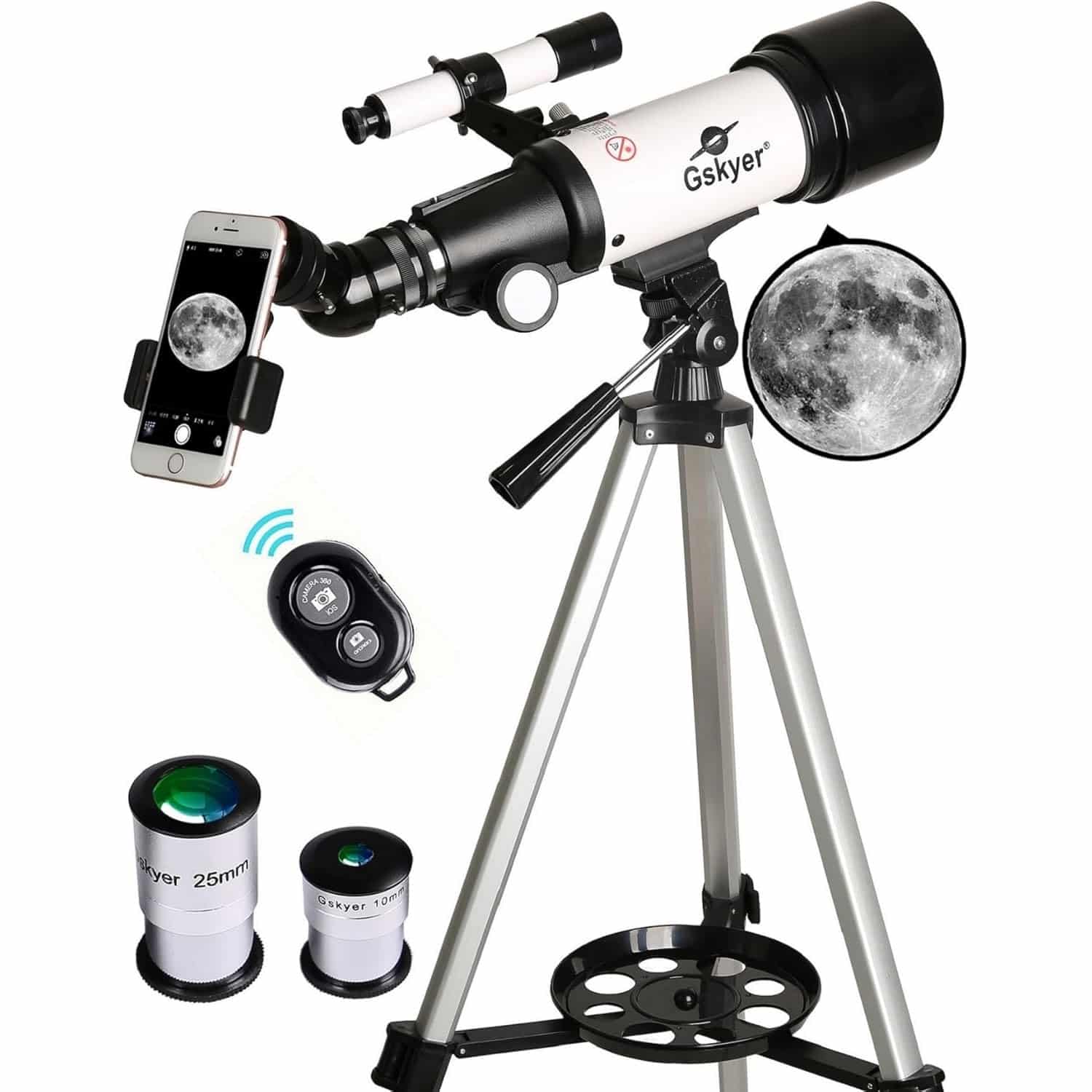
The Gskyer refractor serves as an accessible travel telescope designed for families and curious stargazers. Featuring a 400mm focal length, this model delivers wide fields of view across celestial landscapes. It provides an inviting platform for those transitioning into regular night-sky observation.
Its 70mm aperture features fully coated optical glass with high transmission coatings to maximise incoming light. This setup creates bright images while shielding sensitive eyes from harsh contrast. Users can easily track the moon and neighbouring star clusters.
Magnification options remain practical thanks to two replaceable eyepieces and a matched 3x Barlow lens. The included 5x24 finder scope features internal cross-hairs that streamline pointing towards designated targets across dark horizons.
For added convenience, the system includes a dedicated smartphone mount alongside a wireless camera remote. This allows beginners to photograph lunar surfaces without introducing manual hand vibrations to the telescope body.
Pros
- Lightweight construction for effortless family transport
- Wireless remote enables vibration-free photography
- Includes custom carry bag for travel
- Solid 70mm light-gathering aperture
- Finder scope assists quick object location
- Fully coated glass protects user eyesight
- Straightforward assembly suitable for older children
Cons
- Tripod lacks dampening on rough ground
- Smartphone adapter requires careful manual alignment
Top Pick #2
Overall Grade
B
Why We Chose It
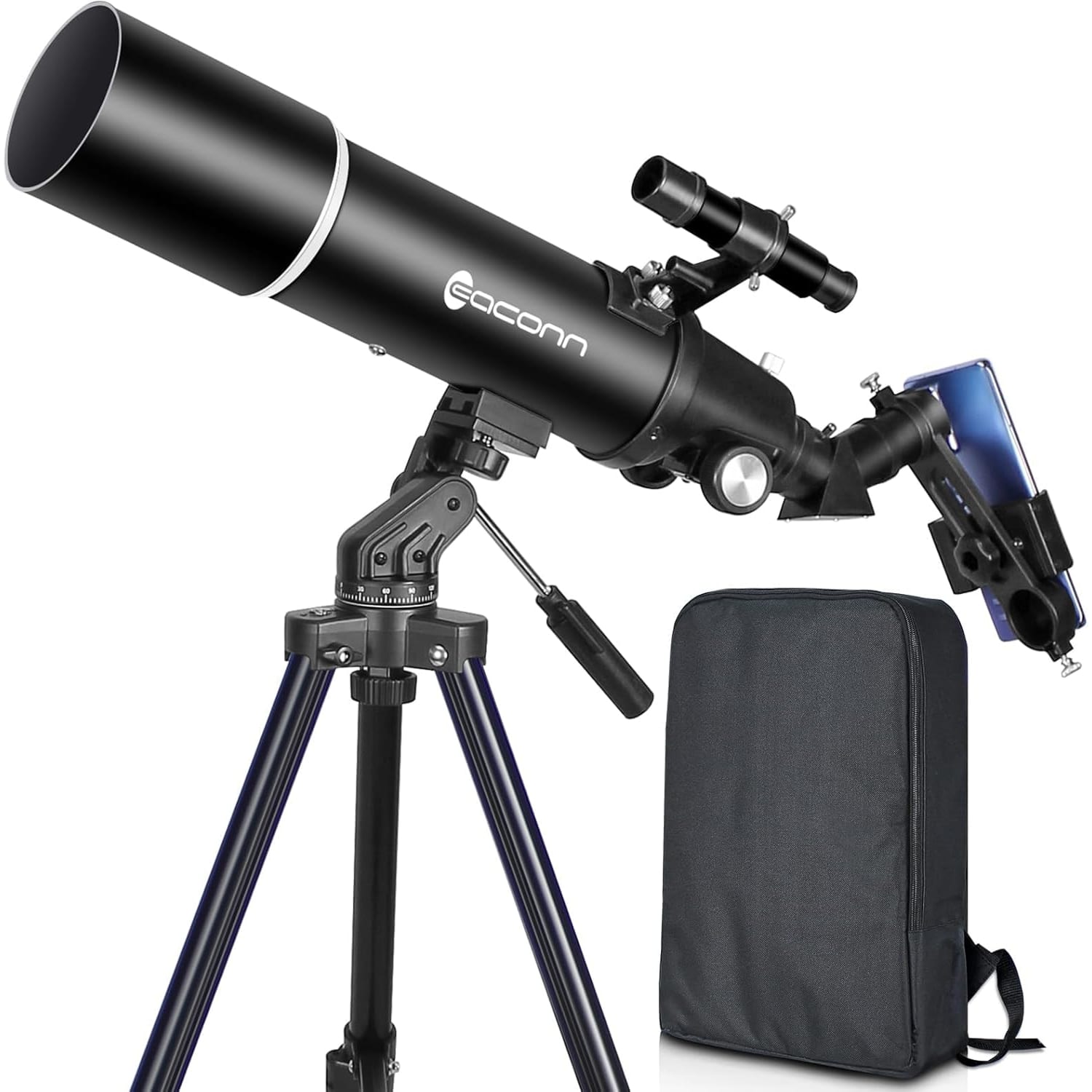
The EACONN refractor delivers enhanced optical performance through its substantial 80mm large aperture. This wider objective lens collects noticeable amounts of extra light compared to standard starter scopes. Beginners will appreciate brighter planetary visuals during dark suburban nights.
Equipped with a balanced 600mm focal length, this refractor achieves a versatile focal ratio suitable for both deep lunar examination and daytime terrestrial viewing. Its green-coated glass elements minimise reflection to maintain genuine colour fidelity across subjects.
Navigation is handled by a specialised positioning gimbal with scale that facilitates precise altitude and azimuth adjustments. This mechanical feature assists beginners in panning smoothly without losing their target mid-observation.
The package contains customized K20mm and K9mm eyepieces along with a tailored dedicated mobile phone adapter. Everything fits inside an included travel backpack, making this kit an ideal present for young astronomers.
Pros
- True 80mm aperture improves image brightness
- Green coated glass reduces optical reflections
- Positioning gimbal simplifies manual tracking adjustments
- Includes fitted backpack for outdoor storage
- Suitable for planetary and terrestrial viewing
- Custom smartphone adapter matches eyepieces accurately
Cons
- Slightly heavier optical tube assembly
- Focal length requires patient manual focusing
- Finder scope alignment needs initial tuning
Top Pick #3
Overall Grade
C+
7.7/10
Why We Chose It
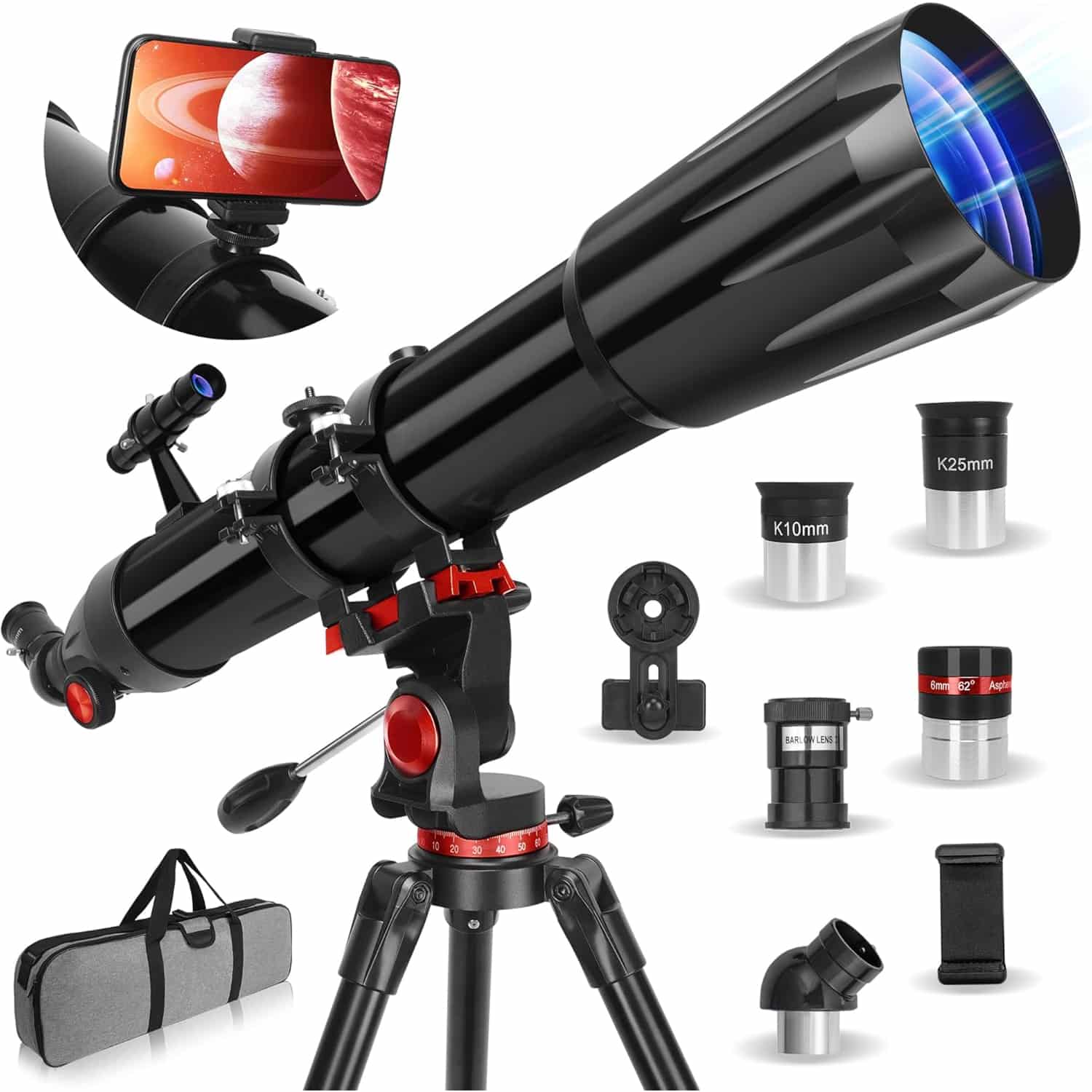
Designed for users seeking long-reach capabilities, the HETEKAN refractor features a massive 900mm focal length. This extended optical path enables high-power planetary inspection of Saturnian rings and lunar crater floors with impressive focal depth.
Light collection is driven by a broad 90mm objective lens crafted from fully multi-coated optical glass. This generous diameter gathers sufficient light to produce vivid lunar contours and sharp celestial boundaries.
Users can select between three eyepieces and an included 3x Barlow lens to achieve up to 450X maximum magnification. A 5x24 finder scope assists in narrowing down coordinates before switching to high-power oculars.
The unit is mounted on a rugged stainless steel tripod adjustable between 28.5 and 45 inches. This sturdy metal foundation provides improved resistance against sudden environmental breezes during outdoor sessions.
Pros
- Large 90mm aperture gathers outstanding light
- Long 900mm focal length enhances magnification
- Robust stainless steel tripod dampens vibrations
- Three interchangeable eyepieces provide diverse views
- High magnification potential up to 450X
- Stargazing mount supports 360-degree horizontal panning
Cons
- Substantial tube length demands careful storage
- High magnification requires extremely stable conditions
- Slightly steeper learning curve for novices
- Heavier overall kit weight reduces portability
Top Pick #4
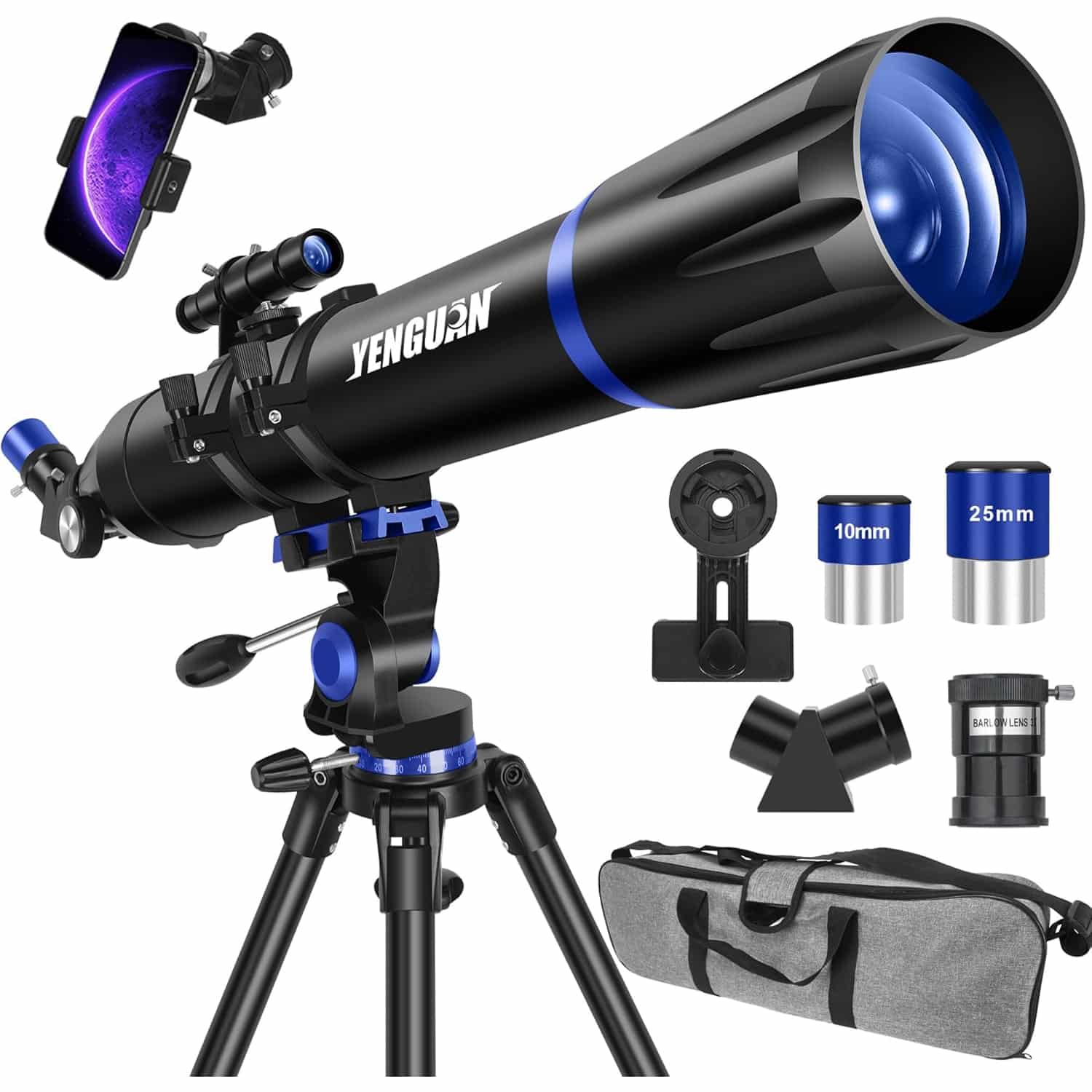
Overall Grade
C
7.4/10
Why We Chose It
The YENGUAN telescope blends light gathering strength with beginner-friendly operation via its 90mm light-gathering aperture. The wide optical entrance permits crisp views of crater textures and bright night-sky objects without overwhelming novice operators.
With a focal length measuring 800mm focal length, this telescope maintains sharp visual clarity while retaining manageable optical tube dimensions. Its multi-layer coated optics offer enhanced moisture resistance during damp evening conditions.
Supplied eyepieces provide magnification spanning from 32x to 240x when paired with the bundled 3x Barlow lens. This versatile range allows seamless transitions from sweeping terrestrial landscapes to focused astronomical targets.
The assembly is anchored by an adjustable stable stainless tripod and includes a padded carry bag. Intuitive mounting brackets enable rapid setup across local parks, campsites, and private gardens.
Pros
- Spacious 90mm objective lens gathers light
- Balanced 800mm length maintains sharp views
- Durable stainless steel tripod improves stability
- Multi-layer glass offers moisture resistance qualities
- Includes portable carry bag for travel
Cons
- Eyepiece selection is more limited
- Barlow lens barrel is constructed from plastic
- Fine adjustment controls feel slightly stiff
- Phone clip requires delicate hand positioning
- Tripod takes up noticeable boot space
Top Pick #5
❓What Are Telescope for Beginners?
Beginner telescopes are optical instruments designed to introduce aspiring stargazers to astronomy without overwhelming technical complexity.
They feature refractor lenses or reflectors configured to collect distant light, focusing it into bright, magnified views of the cosmos.
These starter systems usually incorporate alt-azimuth mounts, lightweight aluminium or steel tripods, and intuitive finder scopes for straightforward manual targeting.
Modern entry-level models provide essential accessories like smartphone adapters and multiple eyepieces, allowing new astronomers to observe lunar formations and bright planets easily.
🎯 Key Features & Advantages: Telescope for Beginners
- Sparks genuine curiosity by revealing real planetary disks and rugged lunar craters clearly.
- Encourages outdoor exploration away from digital screens during clear evening hours.
- Delivers straightforward assembly with tool-free construction designed specifically for astronomy newcomers.
- Enables basic astrophotography using bundled smartphone brackets attached to optical eyepieces.
- Offers dual-purpose viewing across both astronomical night skies and terrestrial wildlife landscapes.
- Provides portable designs with dedicated carry bags for convenient holiday stargazing trips.
🔍 Smart Buying Guide: Telescope for Beginners
- Aperture diameter size determines overall light gathering and brightness of celestial objects.
- Tripod material stability prevents irritating vibrations when viewing at higher magnifications.
- Focal length proportions dictate the field of view and achievable magnification limits.
- Optical glass coatings ensure high light transmission while reducing reflective visual glare.
- Total kit portability affects how easily you can transport gear to dark sites.
⚠️ Smart Shopper Alert: Telescope for Beginners
- Ignoring mount stability leads to frustrating visual shakes at high magnification levels.
- Overemphasising excessive magnification over lens aperture diameter results in dim, blurry images.
- Skipping finder scope alignment during daylight makes finding night targets extremely difficult.
