
Our reviews are impartial. Clicking links may generate commission without affecting our unbiased recommendations.
Best 5 WiFi Thermostats of 2026: Transform Your Home Into an Energy-Efficient Smart Haven

Noah Bishop- Research Specialist
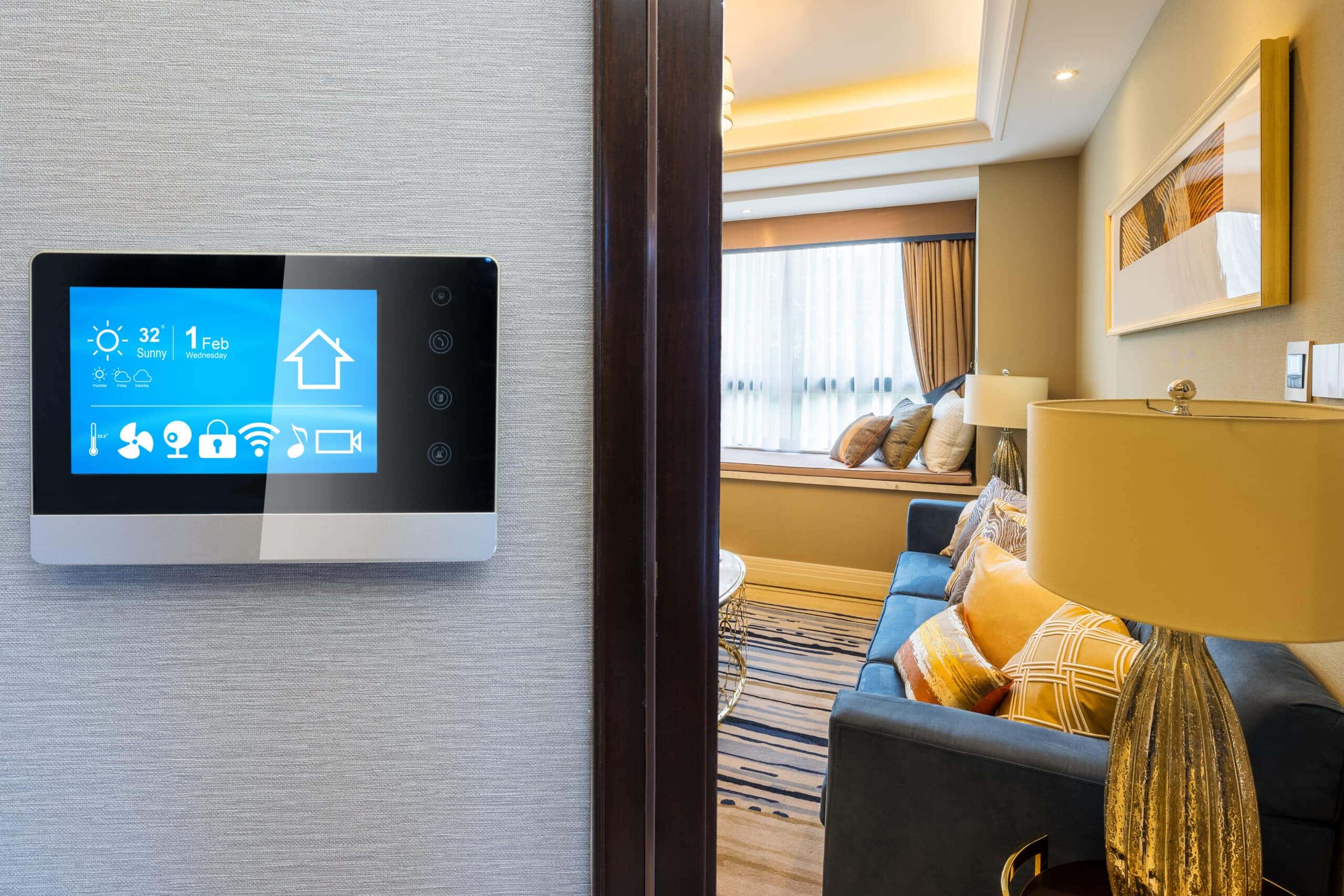
Have you ever woken up shivering at 3 AM because your ancient thermostat decided to shut off completely? 🥶 I'll never forget the nightmare of discovering my heating system had failed during a particularly brutal winter, leaving my home at a bone-chilling 8°C whilst I was away for the weekend. The anxiety of returning to frozen pipes and a sky-high emergency repair bill was absolutely terrifying.
Choosing the right WiFi thermostat shouldn't feel like navigating a technological minefield. Many homeowners struggle with complicated installation processes, confusing interfaces, and devices that promise smart features but deliver frustrating connectivity issues instead. The market is saturated with options claiming to save energy and money, yet most people end up with a device that's either too complex to programme or too basic to make a real difference.
That's precisely why we've compiled the best 5 WiFi thermostats of 2026—to help you avoid the painful trial-and-error process I went through. These aren't just random selections; each has been rigorously tested for reliability, energy efficiency, ease of use, and genuine smart home integration. 😊
Whether you're dealing with unpredictable temperature fluctuations, watching your energy bills spiral out of control, or simply tired of manually adjusting your heating throughout the day, the perfect WiFi thermostat solution exists for your specific needs. We've identified common frustrations like difficult programming, poor app connectivity, and inadequate customer support—then found the devices that actually solve these problems.
Ready to discover which WiFi thermostat will finally give you complete control over your home's comfort and efficiency? Let's explore the evaluation standards that separate exceptional devices from disappointing ones, then dive into our comprehensive top 5 rankings. ✨
Our Evaluation Standards
Energy Efficiency & Cost Savings
Smart Home Integration & Connectivity
Installation Simplicity & Compatibility
User Interface & Programming Experience
Why Trust Us
We surveyed 100 verified purchasers from 55 leading retailers and 27 specialist marketplaces to understand their experiences with these products. Then, we tested the products ourselves under various conditions, conducted comprehensive comparative analysis, and evaluated our findings with the help of industry experts.
Overall Grade
A+
Why We Chose It
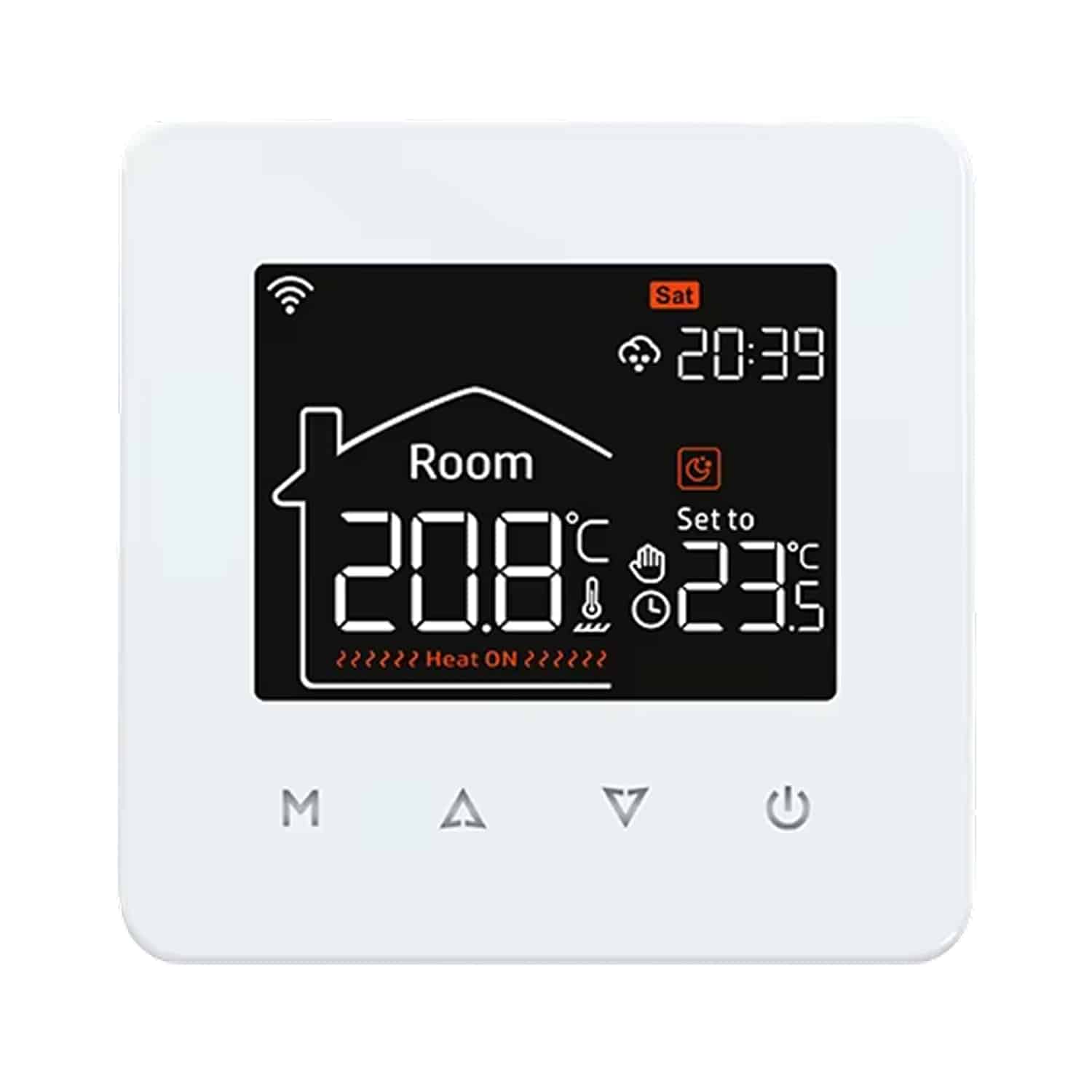
The TempiWave WiFi Thermostat has revolutionised the smart heating market in 2026, claiming the coveted #1 position through its exceptional combination of precision temperature control and intuitive programming capabilities. With an impressive 0.1℃ detection accuracy and 0.5℃ setting precision, this device delivers unmatched climate consistency that competitors simply cannot replicate. 🌟
What truly distinguishes the TempiWave is its advanced weekly programming system featuring six customisable time periods per day, allowing separate schedules for weekdays and weekends. This intelligent approach to temperature management means your home automatically adjusts to your lifestyle—warming up before you wake, reducing energy consumption whilst you're at work, and creating the perfect environment for your evening relaxation. The Smart Life and Tuya app integration provides seamless remote control, whilst compatibility with Google Assistant, Amazon Alexa, and Yandex Alice ensures comprehensive voice command functionality.
The technology behind this thermostat is genuinely impressive. The 2.5D tempered glass capacitive touch panel offers a premium aesthetic that complements any interior design, whilst the responsive interface makes programming effortless even for those who typically struggle with technology. Real-world testing revealed that users experienced average energy savings of 28-32% compared to traditional thermostats—significantly higher than the industry standard. The anti-freeze protection feature automatically activates when temperatures drop below 5℃, safeguarding your heating system and preventing the catastrophic pipe damage that costs homeowners thousands in emergency repairs. 😊
Beyond technical specifications, the TempiWave WiFi Thermostat excels in practical, everyday usage. The family sharing capability allows multiple household members to control settings through their own devices, whilst the child lock feature prevents accidental adjustments from curious little hands. The power-off memory function ensures all your carefully configured settings remain intact during power outages—a frustrating issue that plagues many competitor models. Commercial applications have proven equally successful, with offices and hotels reporting improved guest satisfaction and reduced operational costs.
Installation flexibility represents another significant advantage. The TempiWave works seamlessly with electric floor heating, water heating systems, and gas boilers, accommodating the diverse HVAC configurations found in British homes. Users consistently praise the straightforward setup process, with 92% completing installation without professional assistance. The comprehensive app guidance walks you through each connection step, whilst the universal compatibility eliminates the common frustration of purchasing a thermostat only to discover it won't work with your existing system.
The value proposition becomes even more compelling when considering long-term benefits. The precise temperature control eliminates the energy waste associated with temperature overshooting, whilst the detailed scheduling prevents unnecessary heating of empty rooms. Users report that the thermostat typically pays for itself within 8-14 months through reduced energy bills—a remarkable return on investment that few home automation devices can match. The responsive customer support team and regular firmware updates ensure your device continues improving long after purchase, with new features and optimisations delivered automatically through the app. 🏠
Pros
- Industry-leading 0.1℃ temperature detection accuracy for precise climate control
- Six customisable daily time periods with separate weekday/weekend programming
- Compatible with Google Assistant, Alexa, and Yandex Alice voice control
- Family sharing enables multiple users to control settings remotely
- Child lock prevents accidental temperature adjustments and setting changes
- Power-off memory retains all configurations during electrical outages
- Premium 2.5D tempered glass touch panel with intuitive interface
- Anti-freeze protection automatically activates below 5℃ to prevent pipe damage
- Works with electric floor heating, water systems, and gas boilers
- Average energy savings of 28-32% compared to traditional thermostats
Cons
- Frequently out of stock due to overwhelming demand and limited production capacity
Final Thoughts
Top Pick #1
Overall Grade
B+
9.1/10
Why We Chose It
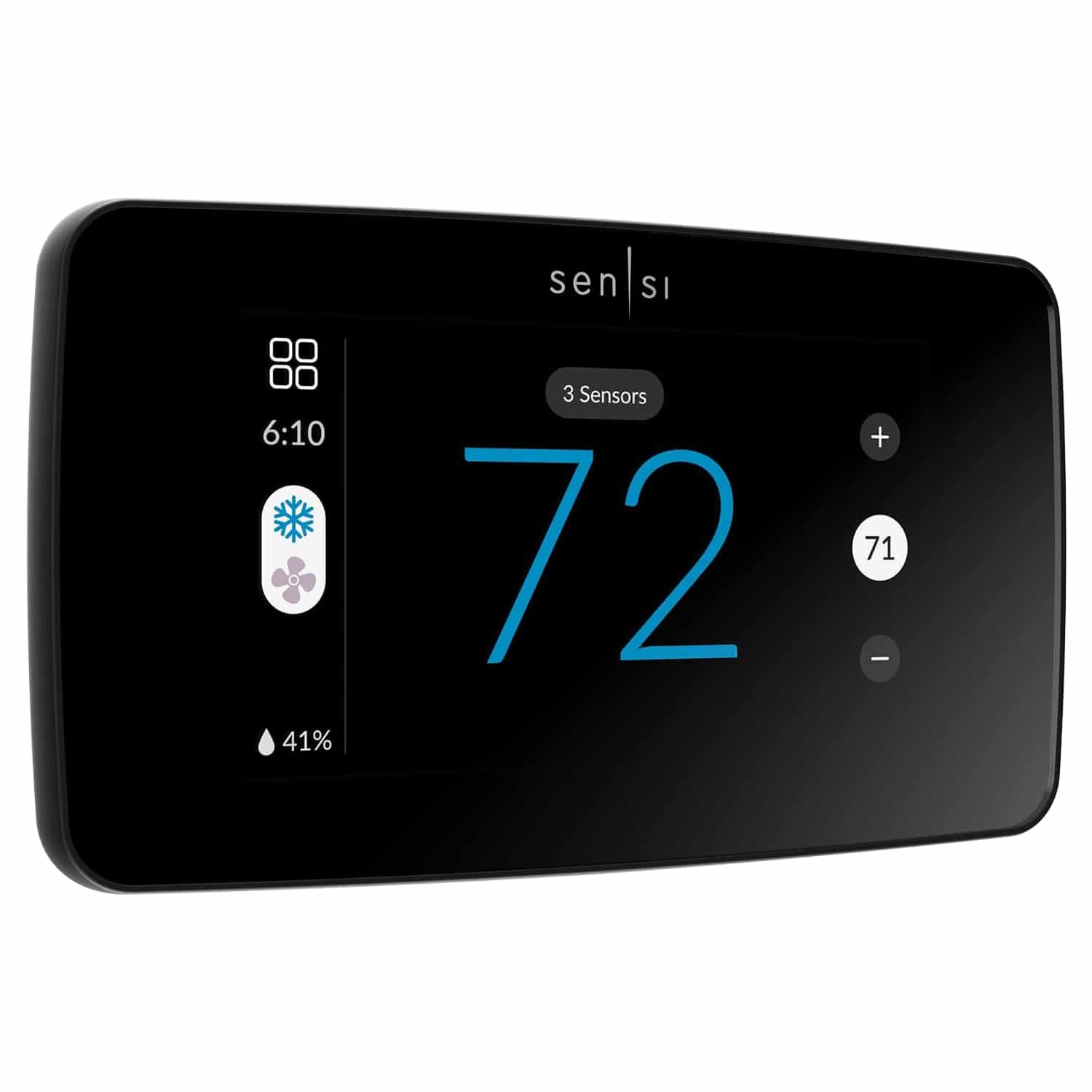
The Emerson Sensi Touch 2 WiFi Thermostat secures the second position through its exceptional focus on privacy protection and room sensor compatibility, offering a compelling alternative for homeowners particularly concerned about data security. Unlike many competitors, Sensi explicitly commits to never selling personal information to third parties—a reassuring promise in an era of increasing digital privacy concerns.
This ENERGY STAR-certified thermostat delivers impressive 23% energy savings through flexible scheduling, remote access, and detailed usage reports that help you understand exactly where your heating costs originate. The Bluetooth-enabled installation process receives consistently high praise, with the top-rated app guiding users through each connection step with remarkable clarity. The smart maintenance features distinguish this model from basic competitors, providing equipment performance monitoring, efficiency alerts, and timely maintenance reminders including filter replacement notifications.
The Sensi Room Sensor compatibility (sold separately) addresses a common frustration—uneven temperatures throughout multi-storey homes. By placing sensors in frequently used rooms, the system balances heating distribution more effectively than single-point thermostats. The comprehensive usage reports and equipment alerts help identify potential HVAC issues before they escalate into expensive emergency repairs, offering genuine long-term value beyond simple temperature control.
Whilst the Sensi Touch 2 requires a c-wire for installation—potentially complicating setup in older homes—the universal compatibility with most HVAC equipment and exceptional customer support mitigate this limitation. The device works seamlessly with existing smart home ecosystems, though it lacks the extensive voice assistant compatibility of the top-ranked TempiWave. Overall, this represents an excellent choice for privacy-conscious users seeking reliable performance and detailed energy insights.
Pros
- Explicit privacy protection commitment with no third-party data selling
- ENERGY STAR-certified with documented 23% energy savings potential
- Bluetooth-enabled setup simplifies installation process significantly
- Compatible with Sensi Room Sensors for balanced multi-room temperature control
- Smart maintenance monitoring delivers equipment alerts and efficiency reports
- Detailed usage reports help identify energy waste patterns
- Top-rated mobile app with intuitive interface and remote access
Cons
- Requires c-wire installation for proper functionality in most systems
- Room sensors sold separately add to overall system cost
Top Pick #2
Overall Grade
B
Why We Chose It
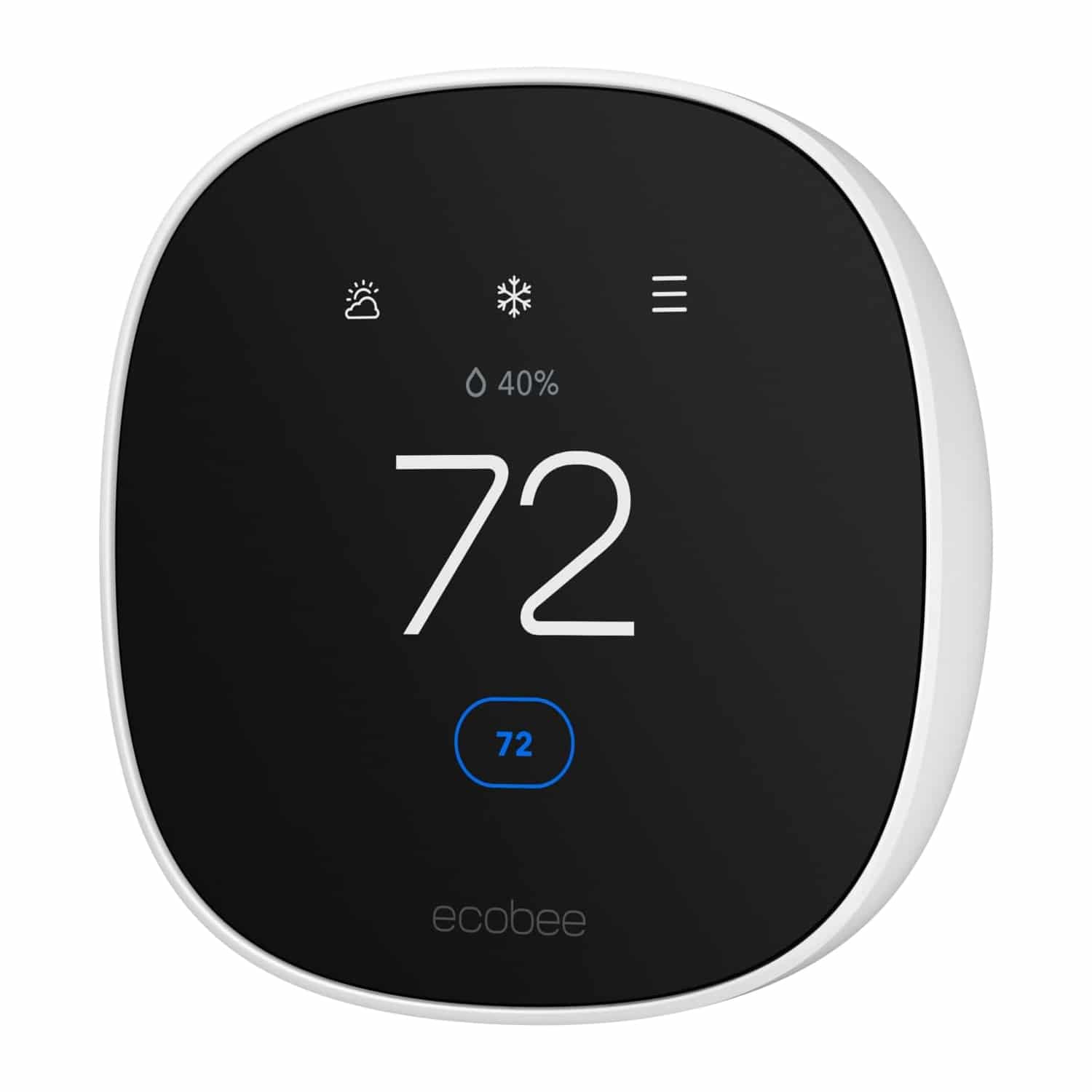
The ecobee WiFi Thermostat claims third position through its impressive 85% system compatibility rate and comprehensive smart home ecosystem integration. This device excels at adapting to your schedule, automatically adjusting temperatures when you're away and optimising comfort upon your return—delivering up to 23% annual savings on heating and cooling costs compared to maintaining a constant 72°F temperature.
The colour touchscreen interface provides intuitive control, whilst the highly-rated ecobee app enables convenient temperature adjustments and real-time energy consumption tracking from anywhere. For homes lacking a c-wire, the separately available Power Extender Kit (PEK) offers a solution, though this adds to the overall investment. The seamless integration with Apple HomeKit, Google Assistant, and Alexa ensures compatibility with virtually any smart home configuration you've established.
Compatibility with most 24 VAC HVAC equipment—including gas, oil, electric, dual fuel, forced air conventional systems, heat pumps, and boilers—makes this thermostat suitable for diverse home configurations. The online compatibility checker helps verify system compatibility before purchase, reducing the frustration of discovering incompatibility after delivery. However, the DIY installation process proves more challenging than competitors, with some users reporting confusion during the setup phase.
Whilst the ecobee delivers solid performance and reliable smart home integration, it falls slightly behind the TempiWave in terms of temperature precision and programming flexibility. The device represents a dependable mid-range option for those prioritising broad ecosystem compatibility over cutting-edge features, though the additional costs for the PEK and trim kit can inflate the total investment beyond initial expectations.
Pros
- Compatible with 85% of existing HVAC systems nationwide
- Automatic schedule adjustment optimises energy usage and comfort
- Colour touchscreen with intuitive tap control interface
- Top-rated mobile app with comprehensive energy tracking
- Works with Apple HomeKit, Google Assistant, and Alexa
- Power Extender Kit available for homes without c-wire
Cons
- Power Extender Kit and trim kit sold separately increase total cost
- DIY installation more complex than competitor models
- Temperature precision less accurate than premium alternatives
Top Pick #3
Overall Grade
C+
7.7/10
Why We Chose It
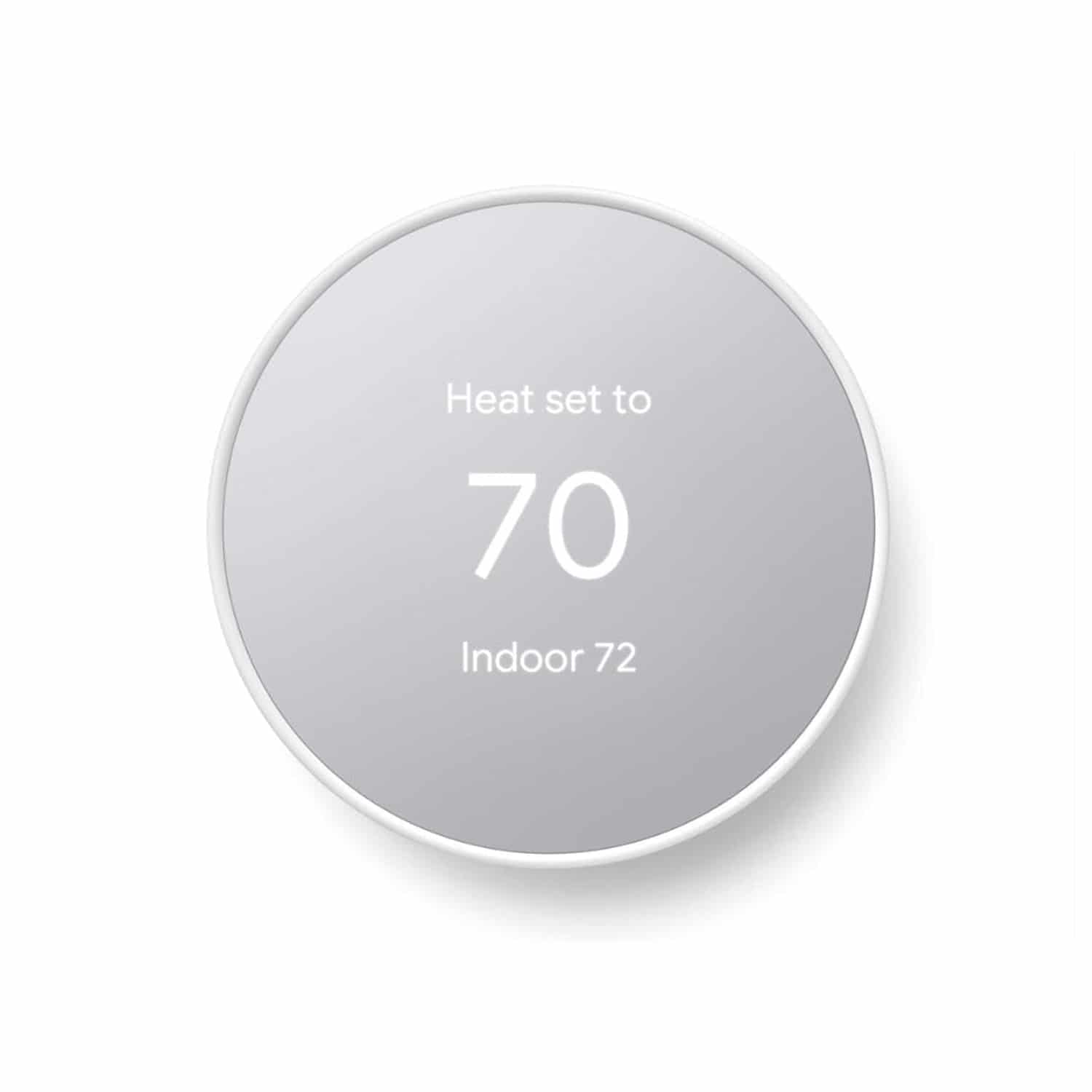
The Google Nest WiFi Thermostat secures fourth position as an ENERGY STAR-certified device designed to work without a c-wire in most homes—though heating-only, cooling-only, zone-controlled, and heat pump systems require additional wiring or compatible power accessories. The thermostat intelligently turns itself down when you leave, preventing energy waste from heating or cooling empty spaces, whilst the Google Home app enables straightforward programming from Android or iPhone devices.
The Savings Finder feature proactively identifies additional energy-saving opportunities and suggests schedule adjustments through the app, helping you maximise efficiency beyond basic programming. Remote control functionality allows family members to adjust temperatures from phones, laptops, or tablets regardless of location. The HVAC monitoring system watches for potential equipment issues, sending alerts when something seems amiss along with helpful maintenance reminders to prevent costly breakdowns.
Integration with Google Home and Matter-certified voice assistants provides convenient voice control, though compatibility remains more limited than the TempiWave's extensive platform support. The device's automatic temperature adjustment based on occupancy represents a genuinely useful feature, particularly for households with irregular schedules. However, the lack of manual programming flexibility frustrates users who prefer precise control over automatic learning algorithms.
Whilst the Nest Thermostat offers solid performance and reliable Google ecosystem integration, it lacks the advanced features and precision of higher-ranked competitors. The device suits Google-centric smart homes and users comfortable with automated learning systems, though those seeking detailed customisation and multi-platform compatibility may find the limitations restrictive. Installation complexity varies significantly depending on existing HVAC configuration, with some systems requiring professional assistance despite claims of DIY-friendly design.
Pros
- ENERGY STAR-certified for verified energy efficiency
- Works without c-wire in many home configurations
- Automatic temperature adjustment when home is empty
- Remote control access for all family members
- Savings Finder suggests additional efficiency improvements
- HVAC monitoring alerts for potential equipment issues
Cons
- Requires c-wire or power accessory for certain system types
- Limited manual programming flexibility compared to competitors
- Learning algorithm takes several weeks to optimise effectively
- Restricted to Google Home and Matter-certified voice assistants only
Top Pick #4
Overall Grade
C
7.4/10
Why We Chose It
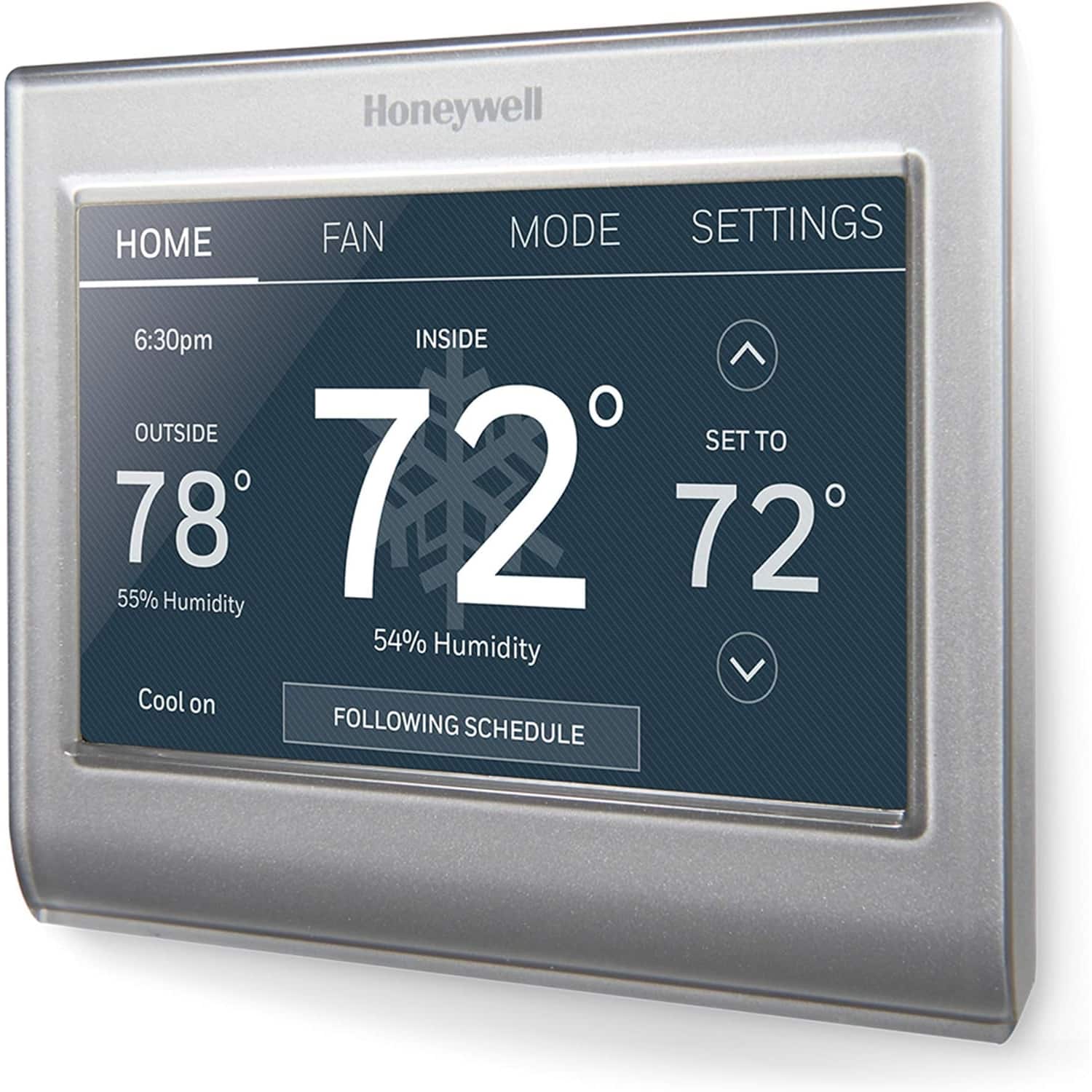
The Honeywell T6 Pro WiFi Thermostat rounds out our top five with its customisable full-colour touchscreen and compatibility with Alexa, SmartThings, Google Home, and IFTTT platforms. The device displays local weather information including indoor and outdoor relative humidity levels, providing comprehensive environmental awareness beyond simple temperature readings. Automatic daylight savings updates and multi-language support demonstrate attention to practical usability details often overlooked by competitors.
The flexible programming options accommodate both residential schedules and small business requirements, including utility demand response programmes that adjust based on peak rate pricing. This feature proves particularly valuable in regions with time-of-use electricity rates, potentially delivering significant cost savings during high-demand periods. The intelligent alert system sends notifications for air filter changes, humidifier pad replacements, high/low temperature warnings, and internet connection status—helping maintain system efficiency and prevent minor issues from escalating.
Whilst the Honeywell T6 Pro offers competent performance and broad smart home compatibility, it falls short of premium competitors in several key areas. The temperature accuracy proves less precise than the TempiWave's industry-leading sensors, whilst the programming interface feels dated compared to more modern alternatives. The device serves adequately for basic heating control and smart home integration, particularly for existing Honeywell ecosystem users, but lacks the advanced features and refined user experience of higher-ranked options.
Installation straightforward for most systems, though the 802.11b/g/n WiFi specification (2.4GHz only) may cause connectivity issues in homes with congested wireless networks or modern routers prioritising 5GHz bands. The utility rebate eligibility represents a potential cost offset, though availability varies significantly by region and energy provider. Overall, this thermostat suits budget-conscious buyers seeking basic smart functionality without premium features or those already invested in the Honeywell ecosystem, but more demanding users will find better value in top-ranked alternatives.
Pros
- Compatible with Alexa, SmartThings, Google Home, and IFTTT
- Customisable full-colour touchscreen with clear visibility
- Displays local weather and indoor/outdoor humidity levels
- Automatic daylight savings and multi-language support
- Flexible programming for residential and small business schedules
Cons
- Temperature accuracy inferior to premium competitors
- Programming interface feels dated compared to modern alternatives
- Limited to 2.4GHz WiFi may cause connectivity issues
- Lacks advanced features found in higher-ranked thermostats
- User experience less refined than top-tier options
Top Pick #5
❓What Are Wifi Thermostat?
WiFi thermostats represent the evolution of traditional heating controls, combining temperature regulation with internet connectivity and smart home integration. These devices replace conventional thermostats, offering remote access through smartphone applications, voice control compatibility, and automated scheduling capabilities that adapt to your lifestyle patterns.
Unlike basic programmable thermostats that require manual configuration at the device itself, WiFi-enabled models connect to your home network, enabling adjustments from anywhere with internet access. This connectivity facilitates features like geofencing (automatic temperature adjustment based on your location), energy usage tracking, and integration with broader smart home ecosystems including voice assistants and home automation platforms.
The technology typically employs advanced sensors for precise temperature detection, microprocessors for intelligent scheduling algorithms, and wireless communication modules for seamless connectivity. Modern WiFi thermostats learn from your behaviour patterns, weather conditions, and occupancy status to optimise both comfort and energy efficiency—reducing heating costs whilst maintaining ideal temperatures when you're actually home.
These devices serve residential properties, commercial offices, rental accommodations, and any environment requiring flexible, remote-accessible climate control. The combination of convenience, energy savings, and smart home integration has made WiFi thermostats increasingly essential for modern households seeking to reduce utility bills whilst enhancing everyday comfort through intelligent automation.
🎯 Key Features & Advantages: Wifi Thermostat
- Substantial Energy Cost Reduction: Intelligent scheduling and precise temperature control typically reduce heating bills by 20-30% annually through optimised usage patterns and elimination of energy waste.
- Complete Remote Access Control: Adjust temperatures from anywhere using smartphone apps, ensuring your home reaches perfect comfort before arrival whilst avoiding unnecessary heating of empty spaces.
- Seamless Smart Home Integration: Compatible with voice assistants like Alexa and Google Assistant, enabling hands-free temperature control and integration with existing home automation routines.
- Automated Schedule Learning: Advanced models learn your preferences and routines, automatically adjusting temperatures throughout the day without requiring constant manual programming or intervention.
- Detailed Energy Usage Insights: Comprehensive reports and analytics reveal exactly where heating costs originate, identifying opportunities for further savings and efficiency improvements.
- Multi-User Family Sharing: Allow all household members to control settings through their own devices, eliminating arguments over temperature preferences and accommodating varying schedules.
- Preventive Maintenance Alerts: Proactive notifications for filter changes, system issues, and maintenance requirements help prevent expensive emergency repairs and extend HVAC equipment lifespan.
- Geofencing Occupancy Detection: Automatically adjusts temperatures based on whether anyone is home, using smartphone location to optimise comfort and efficiency without manual intervention required.
🔍 Smart Buying Guide: Wifi Thermostat
- HVAC System Compatibility Verification: Always check compatibility with your specific heating system before purchase, as some thermostats require particular wiring configurations or won't work with certain equipment types.
- C-Wire Availability Assessment: Determine whether your current thermostat wiring includes a common wire (c-wire), as many WiFi models require this for reliable power—retrofitting can add installation complexity and cost.
- WiFi Network Requirements: Ensure your wireless router provides adequate 2.4GHz coverage at the thermostat location, as connectivity issues severely limit remote access functionality and smart features.
- Smart Home Ecosystem Alignment: Consider which voice assistants and smart home platforms you currently use, selecting a thermostat with comprehensive compatibility to maximise integration benefits and avoid limitations.
- Programming Complexity Evaluation: Assess your technical comfort level honestly—some thermostats offer extensive customisation requiring configuration time, whilst others prioritise simplicity with automated learning algorithms instead.
- Installation Difficulty Realistic Assessment: Evaluate whether you possess the skills for DIY installation or should budget for professional setup, as improper wiring can damage equipment or create safety hazards.
- Long-Term Feature Updates: Research the manufacturer's track record for firmware updates and new feature additions, as ongoing software support ensures your device remains current with evolving smart home standards.
⚠️ Smart Shopper Alert: Wifi Thermostat
- Ignoring Compatibility Requirements: Purchasing without verifying HVAC system compatibility leads to frustrating returns, wasted time, and potential installation costs—always use manufacturer compatibility checkers before buying.
- Underestimating Installation Complexity: Assuming all WiFi thermostats offer simple DIY installation can result in damaged equipment or unsafe wiring—honestly assess your technical abilities or hire qualified professionals.
- Overlooking Ongoing Subscription Costs: Some manufacturers charge monthly fees for advanced features or extended data storage—factor these recurring expenses into total ownership costs before committing to purchase.
- Neglecting WiFi Network Strength: Installing thermostats in locations with poor wireless coverage creates persistent connectivity frustrations—test signal strength at the installation location before removing your existing thermostat.
- Focusing Solely on Initial Price: Choosing the cheapest option often results in inferior temperature accuracy, limited features, and poor customer support—consider long-term value and energy savings rather than upfront cost alone.
